

You are here
Back to topBlueberry Prices Plummet in China
April 06, 2026
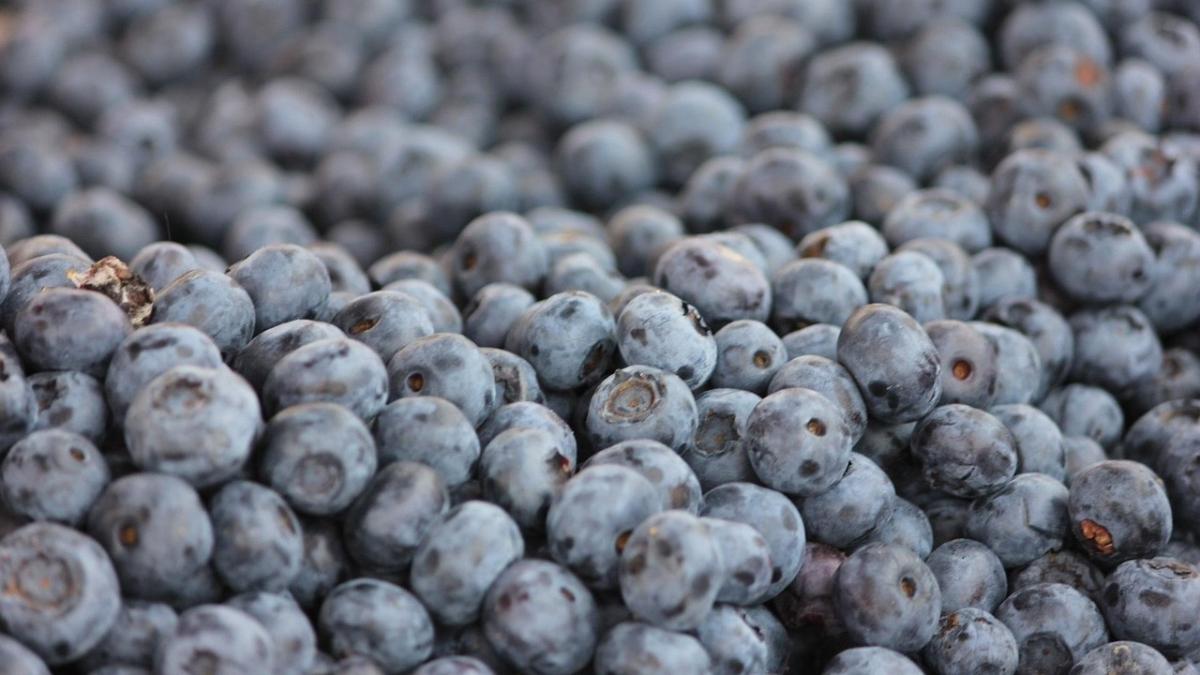


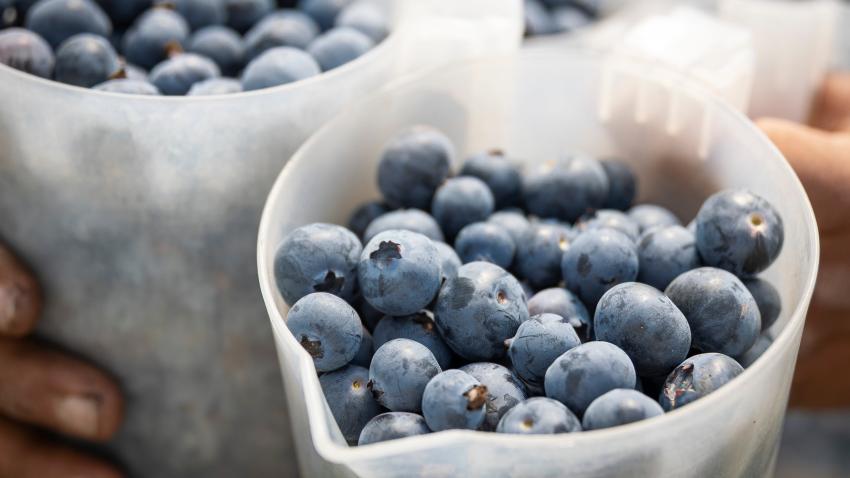
Since March, the topic of “blueberry price collapse” has been repeatedly trending online, as what was once a middle-class fruit has lost its premium status. In supermarkets in Shenzhen, the price of a 250-gram pack of fresh blueberries has dropped from nearly 30 Chinese yuan ($4.36) to 19.9 yuan ($2.89). In livestreaming rooms at the origin in Chengjiang, Yunnan province, blueberries are being sold by the bucket. On the streets of a fourth-tier city in Sichuan, crates of blueberries are piled on handcarts, selling freely at 70–90 yuan ($10.17–13.08) per kilogram — nearly half the price seen during the Chinese New Year holiday.
As of late March 2026, domestic blueberries were in a peak supply period, with Yunnan’s main production areas entering large-scale harvest and prices falling sharply, while northern production regions were also beginning their early-season supply phase.
According to industry data, China’s blueberry planting area totaled 1.58 million mu (105,333 hectares) in 2025, with production reaching 810,000 metric tons. In 2026, the output from Yunnan’s main producing areas increased by 39% year on year. The massive influx of blueberries into the market has directly driven down nationwide prices.
Honghe Hani and Yi Autonomous Prefecture is the leading blueberry production base in Yunnan with over 150,000 mu (10,000 hectares) of planting area, accounting for 60% of the province’s total, and a production value exceeding 12 billion yuan ($1.74 billion).
Current prices in Honghe have already fallen to low levels: farm-gate prices for premium fruit with a diameter above 18 millimeters are 60–65 yuan ($8.72–9.44) per kilogram, while fruit with a diameter above 15 millimeters are selling for 45–50 yuan ($6.54–7.26) per kilogram, both significantly lower than the levels prior to Chinese New Year.
Chengjiang, a core production area in the city of Yuxi, has a planting area of 21,000 mu (1,400 hectares). Its harvest season runs from December to May, slightly later than Honghe, with a longer growth cycle and fruit bearing a more intense flavor.
Current farm-gate prices there are as follows: floral-scent blueberries with a diameter above 18 millimeters are priced at 70 yuan ($10.17) per kilogram, while fruit above 15 millimeters are priced at 55 yuan ($7.99) per kilogram. For the F6 variety, fruit above 18 millimeters are priced at 65 yuan ($9.44) per kilogram, and fruit above 15 millimeters are priced at 45 yuan ($6.54) per kilogram.
It is worth noting that open-field cultivation costs in Chengjiang are around 20 yuan ($2.91) per kilogram of blueberries, while substrate cultivation costs are about 30 yuan ($4.36) per kilogram. At present, purchase prices for small-sized fruit have already fallen to 16–24 yuan ($2.32–3.49) per kilogram.
In addition to the surge in production, the sharp price decline of Yunnan blueberries has also been driven by weather and seasonal factors. In March, continuous sunny weather caused blueberries that normally ripen in batches to enter harvest almost simultaneously, resulting in a high degree of overlap in ripening periods. During the Chinese New Year holiday, labor shortages delayed harvesting. The backlog of fruit after the holiday when work recommenced further intensified the oversupply situation.
Sichuan is a key blueberry-producing region in southwestern China and is currently in the early stage of a limited supply cycle, with the main harvest season concentrated in May and June. In Jianyang, the early-ripening L11 variety is currently priced at around 38–40 yuan ($5.52–5.81) per kilogram at the farm-gate wholesale level, slightly below Yunnan’s prevailing wholesale prices. As the main harvest season approaches, Sichuan’s supply is expected to increase significantly and prices are likely to see a further modest decline.
Shandong, Liaoning and Jiangsu — main blueberry-producing provinces in northern China — are now gradually entering the early harvest stage, with early-ripening varieties grown in greenhouses beginning to reach the market in small volumes. A peak supply period is expected in April and May. Current prices remain relatively stable with no significant decline yet. Owing to the later harvest season compared with Yunnan, supply in northern China is still limited and prices are notably higher. Premium fruit are currently priced at around 80–100 yuan ($11.62–14.53) per kilogram at the farm-gate level, while standard fruit remain above 60 yuan ($8.72) per kilogram.
Domestic blueberry prices in April and May 2026 are expected to remain at relatively low levels. In Yunnan, supply in April will remain abundant, with prices likely fluctuating at low levels of around 40–50 yuan ($5.81–7.26) per kilogram. As inventories are gradually absorbed, a slight rebound may occur. By May, Yunnan blueberries will enter the late stage of the season, with declining supply and a potential modest price increase, although prices are unlikely to return to pre-Chinese New Year highs.
In northern production areas, large-scale harvesting in Shandong, Liaoning and other provinces during April and May will further increase the nationwide supply, exerting continued downward pressure on overall prices. However, given the relatively higher quality of northern blueberries, premium fruit prices are expected to remain comparatively firm.
Image: Pixabay
This article was translated from Chinese. Read the original article.
Topics:
Regions:
Produce:
Related Reads



-
September 29, 2026
-
September 28, 2026
-
September 28, 2026
-
September 27, 2026
-
September 27, 2026
-
September 15, 2026
-
September 15, 2026
-
September 13, 2026
-
September 09, 2026
-
September 07, 2026
Upcoming Events


Produce Marketplace
- ElGhouati Crops · Morocco
- ElGhaoutiCrops · Morocco
- Elangeni Food Group · South Africa
- Hainan ITG Logistics · A26,Haikou
- Joshua Lim · Malaysia
- City fresh fruit co. · Thailand

Add new comment