

You are here
Back to topXiaoxiang Supermarket Expands to 57 Cities in Lower-Tier Market Push
May 19, 2026
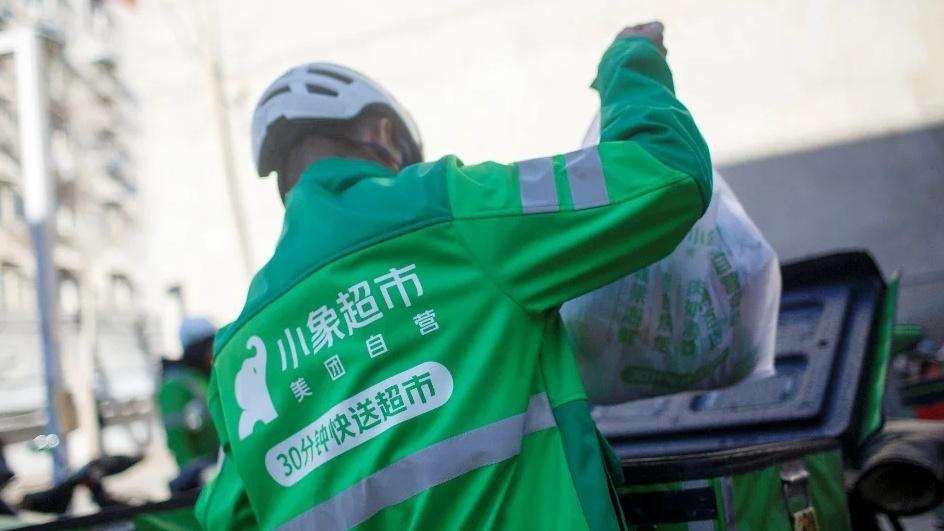


Meituan’s 30-minute express-delivery supermarket brand, Xiaoxiang Supermarket, has been making a string of moves lately, rapidly expanding both its front-warehouse network and its physical store presence.
On May 8, Meituan’s first Xiaoxiang Supermarket location in Shantou opened at Heyue Plaza on Hengshan Road. Meituan also confirmed the opening of six new front-warehouse sites in Jinan in late May. On April 24, Xiaoxiang Supermarket opened a new physical store in Ningbo on the same day as competitor Hema Fresh. Over the past year or two, the chain has focused on entering second-tier cities across the country, laying the groundwork for broader expansion.
Xiaoxiang Supermarket now has a presence in 57 cities across China, with its total number of front warehouses surpassing 2,000. In central China, it has expanded into every prefecture-level city in the region, reaching third-tier cities such as Hengyang, Changde and Huanggang. In eastern China, the country’s highest-spending region, it has pushed into prosperous mid-sized cities including Huzhou, Jiaxing and Shaoxing. In the north, building on its success in Beijing, it has moved into lower-tier cities such as Baoding and Cangzhou. In the south, it has stretched beyond Guangzhou and Shenzhen into second-tier cities such as Huizhou and Jiangmen. In the west, anchored by Chengdu, Chongqing and Xi’an, it has extended its reach into surrounding second-tier cities as a stepping stone toward expansion into third- and fourth-tier cities.
The on-demand retail industry has followed a clear pattern of expansion from first- and second-tier cities into smaller markets. Even in China’s lower-tier cities, consumers have already adopted mobile payment platforms and instant delivery as part of their everyday habits. Xiaoxiang is well placed to capitalize on this: drawing on consumer data accumulated across Meituan’s network of more than 50,000 warehouses, the company is able to analyze regional differences in purchasing preferences, average order values and peak ordering times with a high degree of precision, allowing it to fine-tune its product mix and pricing while reducing the risk of excess inventory.
For Xiaoxiang Supermarket, entering lower-tier markets was always an inevitable step. Operating costs such as rent and labor are significantly lower in third- and fourth-tier cities, bringing down the revenue threshold that a single warehouse needs to break even. Unlocking the latent spending power of those markets is the key to the on-demand retail sector’s sustainable, long-term growth.
Image: Meituan
This article was based on a Chinese article. Read the original article.
Regions:
Produce:




-
July 02, 2026
-
July 01, 2026
-
June 29, 2026
-
June 28, 2026
-
June 24, 2026
-
June 08, 2026
-
June 09, 2026
-
June 12, 2026
-
June 05, 2026
-
June 08, 2026
Upcoming Events



Produce Marketplace
- ElGhaoutiCrops · Morocco
- Elangeni Food Group · South Africa
- Universal Capital Gr · Ecuador
- jnCFwVZnsYTpJHPk · lWawzclzze
- Hainan ITG Logistics · A26,Haikou
- Joshua Lim · Malaysia

Add new comment