

You are here
Back to topMiddle East Conflict Disrupts Global Shipping and Food Supply
March 09, 2026
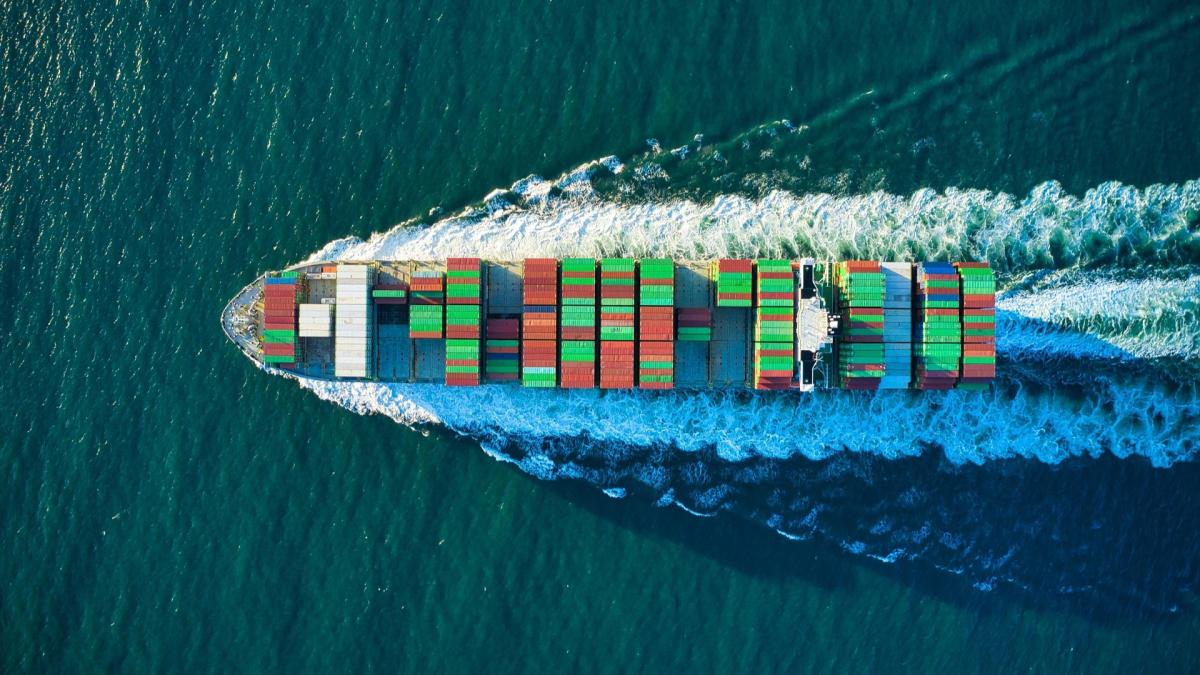


March coincides with the Ramadan season in the Middle East, during which demand for fruits and vegetables in Gulf countries surges and cross-border trade becomes particularly active. On Feb. 28, following a joint military strike by the United States and Israel against Iran, global supply chains entered a state of heightened tension, triggering widespread disruptions in the Strait of Hormuz, one of the world’s most critical trade corridors.
The Strait of Hormuz connects the Persian Gulf and the Indian Ocean and carries about one-quarter of the global oil trade. This busy waterway has now effectively become a restricted shipping zone.
The impact of the military strike extends far beyond oil tankers transiting the strait — numerous container ships have been forced to reroute or face delays, while sudden airspace closures have also disrupted air cargo networks. The attack on Iran means that shipping companies may divert more cargo around the Cape of Good Hope at the southern tip of Africa, increasing the average transit time for goods traveling between Europe and Asia by approximately 10–15 days.
On March 1, Mediterranean Shipping Company, the world’s largest container shipping company by capacity, announced that it had suspended all cargo shipments to the Middle East until further notice.
Amid concerns that escalating tensions in Iran could spread to major maritime routes, Danish shipping giant Maersk has also suspended navigation through the Red Sea and the Suez Canal. The company is adjusting its routes to detour around the Cape of Good Hope. On March 2, Maersk further announced that it had stopped accepting hazardous cargo in several Gulf countries and halted new bookings between the Indian subcontinent and major markets in the northern Gulf region.
Furthermore, French shipping giant CMA CGM has suspended navigation through the Suez Canal and rerouted its vessels around the Cape of Good Hope. On March 2, the company announced that rising security risks had forced it to impose an emergency conflict surcharge effective immediately, adding $2,000–4,000 per container for shipments to and from Gulf and Red Sea countries.
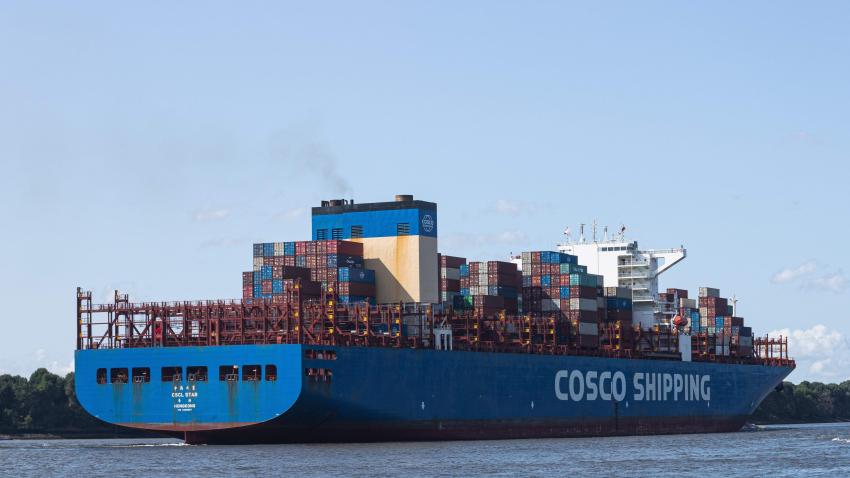
In a similar move, Germany’s Hapag-Lloyd has introduced a $1,500 war risk surcharge per standard container and suspended vessel transits through the Strait of Hormuz. Meanwhile, China’s COSCO Shipping Lines stated on March 1 that it had instructed vessels already in the Gulf to move to safe waters and either hold position or lay anchor.
Japanese container shipping company Ocean Network Express also announced on March 2 that it would temporarily suspend bookings for cargo to and from the Persian Gulf until further notice.
Sailing around Africa instead of transiting the Suez Canal is estimated to absorb about 2.5 million TEU of global container shipping capacity. Besides maritime transport, air freight has also been severely affected. Several countries across the Middle East have closed or restricted their airspace, disrupting both passenger and cargo flights.
Ryan Petersen, CEO of Flexport, a U.S. multinational corporation that focuses on supply chain management and logistics, noted that the Middle East conflict has reduced global air cargo capacity by 18%.
Expana, one of the world’s leading agri-food market intelligence and price reporting platforms, has warned that, owing to shipment delays and rerouting around the Cape of Good Hope for cargo bound for European countries, products such as Asian shrimp may face supply shortages. At the same time, grain prices are rising because of transport disruptions, while Asian dried fruit and nut exporters are also encountering difficulties in supplying goods to major markets. In a report on March 2, Expana noted that almost all carriers of Asian fruits and nuts had stopped accepting new bookings, and some services may adjust their schedules.
Iran is the world’s second-largest producer of pistachios, accounting for approximately 18% of global production. It is also a major producer of walnuts, almonds, saffron and dates, meaning that disruptions could have an impact on global supply.
On March 3, Tasnim News Agency reported that Iran had announced a ban on the export of all food and agricultural products. A government statement said that cargo shipments would be blocked until further notice. As the conflict spreads to other parts of the Middle East, Kuwait has also announced a temporary ban on food exports.
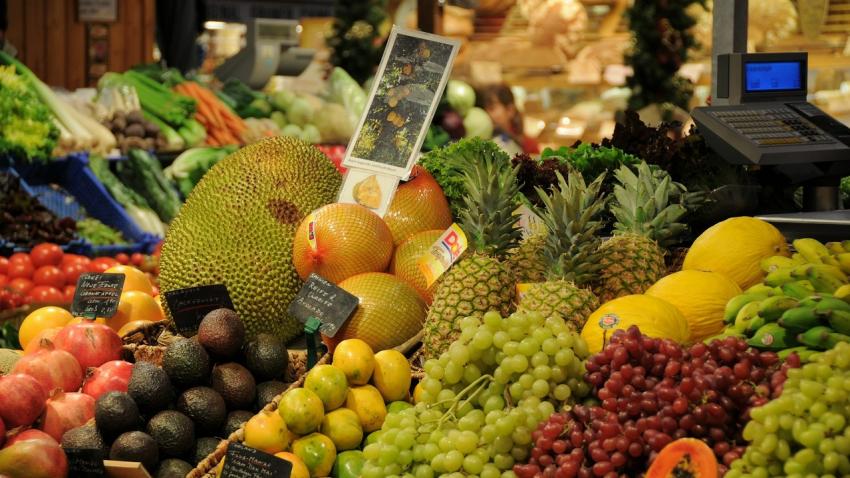
Image: Pixabay
This article was translated from Chinese. Read the original article.
Produce:




-
October 21, 2026
-
October 20, 2026
-
October 19, 2026
-
October 18, 2026
-
October 16, 2026
-
October 06, 2026
-
September 23, 2026
-
September 29, 2026
-
September 28, 2026
-
September 27, 2026

Produce Marketplace
- Pujiang Tangguo Agri · China
- Pujiang Tangguo Agri · China
- ElGhouati Crops · Morocco
- Hainan ITG Logistics · A26,Haikou
- Joshua Lim · Malaysia
- City fresh fruit co. · Thailand

Add new comment