

You are here
Back to topMango and Avocado Forum Proves a Highlight of Macfrut 2026
April 29, 2026
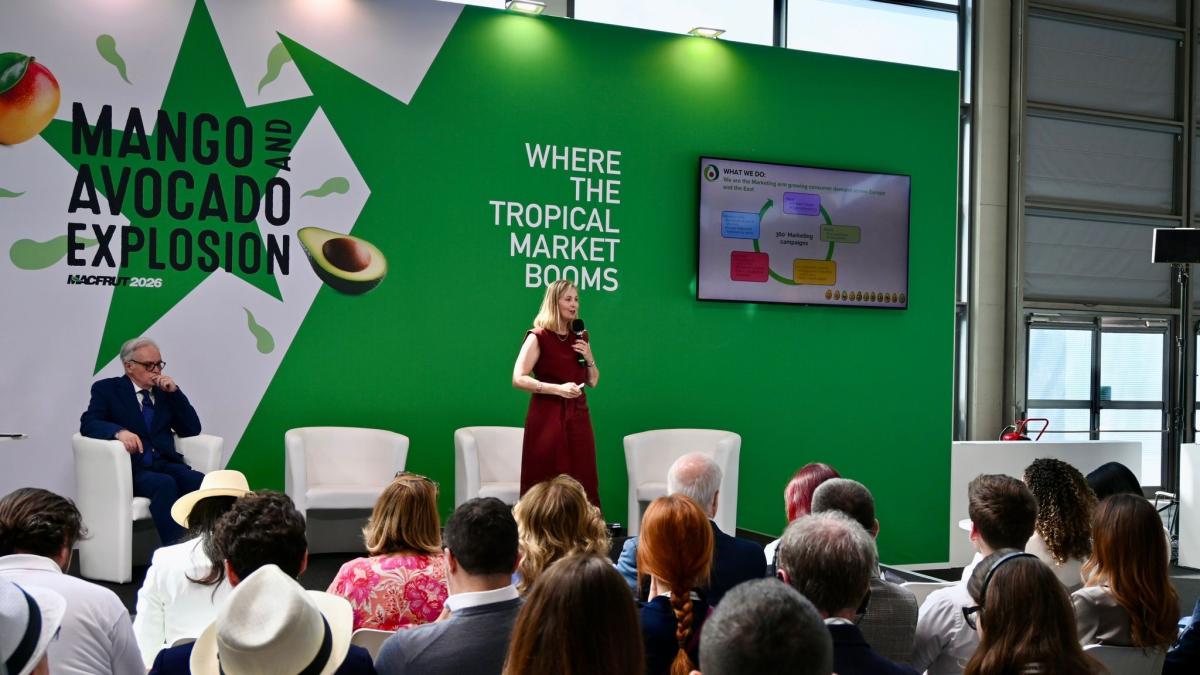


Macfrut 2026 placed mangos and avocados firmly in the spotlight, with the trade show featuring a dedicated forum that brought together market analysts, producer organizations, technology specialists and industry leaders to examine the future of two of the fastest-growing tropical fruit categories in Europe.
Held during the opening days of the show at the Rimini Expo Centre in Italy, the events reflected the strategic importance of both products for global trade. Across a packed program in the Mango & Avocado Arena, speakers explored everything from health benefits and processing innovations to production trends, export opportunities and changing consumption habits.

The forum opened with a technical workshop called “Mango & Avocado Next,” which looked at emerging technologies for novel high-quality products. Arrigo Cicero, professor at the University of Bologna’s Department of Medical and Surgical Sciences, reviewed international studies on the nutritional and health properties of mangos and avocados. He noted that both fruits can exert positive impacts on carbohydrate and lipid metabolism as well as cardiovascular risk markers, while stressing the importance of balanced caloric intake and regular consumption within a healthy diet.
Processing innovations were another key theme. Junior Bernardo Molina Hernandez from the University of Bologna’s Department of Agricultural and Food Sciences and Technologies discussed methods designed to improve the quality and shelf-life of fresh-cut and processed mango and avocado products, including mango nectar and avocado flour and pulp. Techniques such as UV-C and pulsed light, cold plasma, high pressure, ultrasound, ozone and electrolyzed water were highlighted for their ability to preserve flavor, nutrition and freshness with minimal thermal impact.
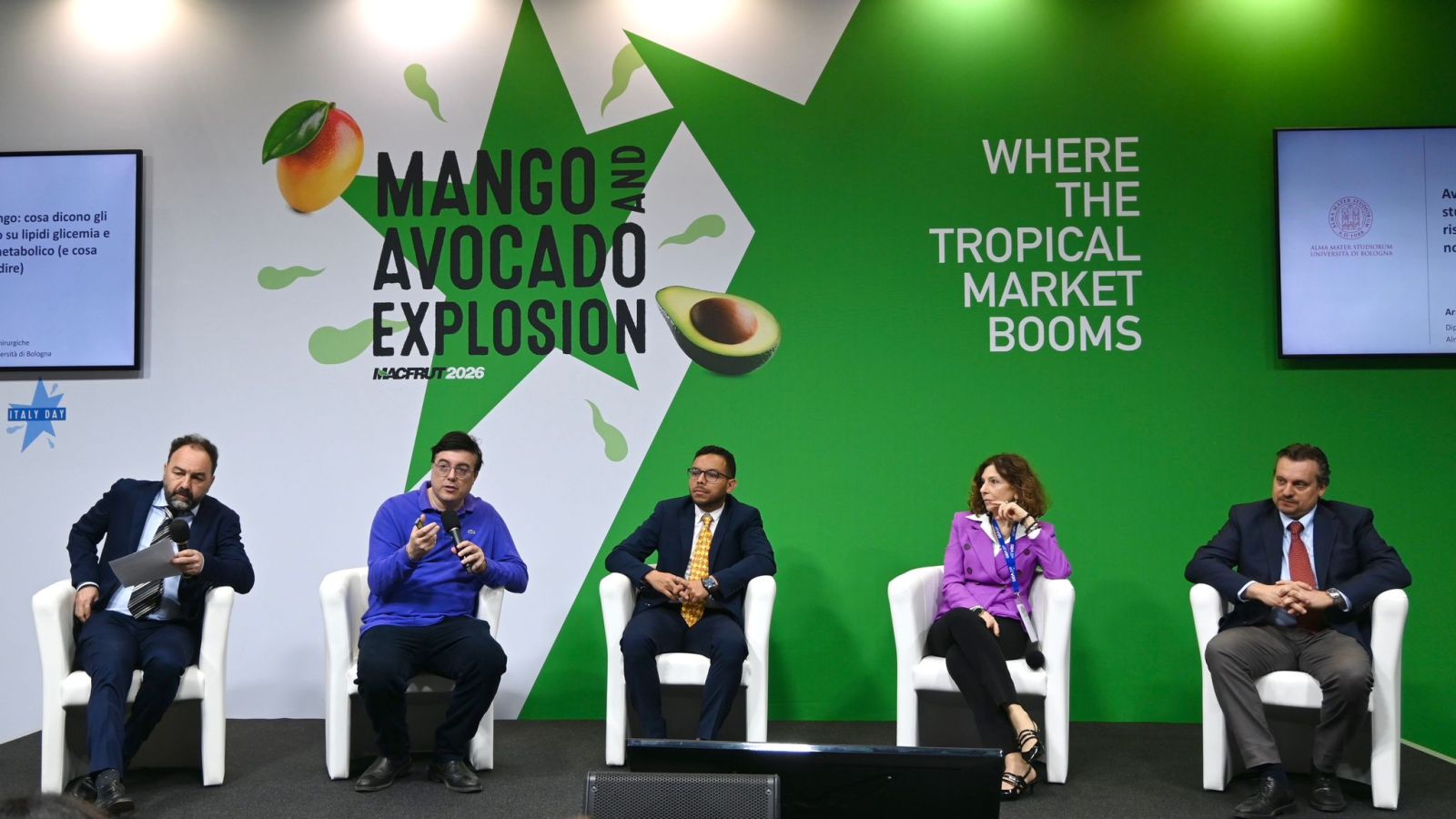
Further industrial perspectives came from Silvia Grasselli of GEA Group, who presented advanced high-pressure homogenization technologies for juices, concentrates and beverages, and Stefano Concari, general manager of Tropical Food, who outlined processing lines and methods for handling mangos and avocados efficiently at the industrial scale.
The mango market session underlined the category’s strong growth but also its untapped potential. Philippe Binard, general director of Freshfel Europe, said that global mango production now exceeds 60 million metric tons, up 50% over the past 15 years. Over the same period, exports have increased from 1.5 million to 2.2 million metric tons. India remains the largest producer, contributing 26 million metric tons or 43% of the worldwide total, while Mexico leads global exports with more than 450,000 metric tons.
For Europe, Brazil has become a key supplier, accounting for 80% of its more than 265,000 metric tons exported to the continent. European mango imports have risen by 110% over 15 years to reach 444,500 metric tons in 2025. According to Binard, future growth will depend on market positioning, higher quality standards and wider consumer penetration, while challenges include climate change, logistical uncertainties and rising transport costs.
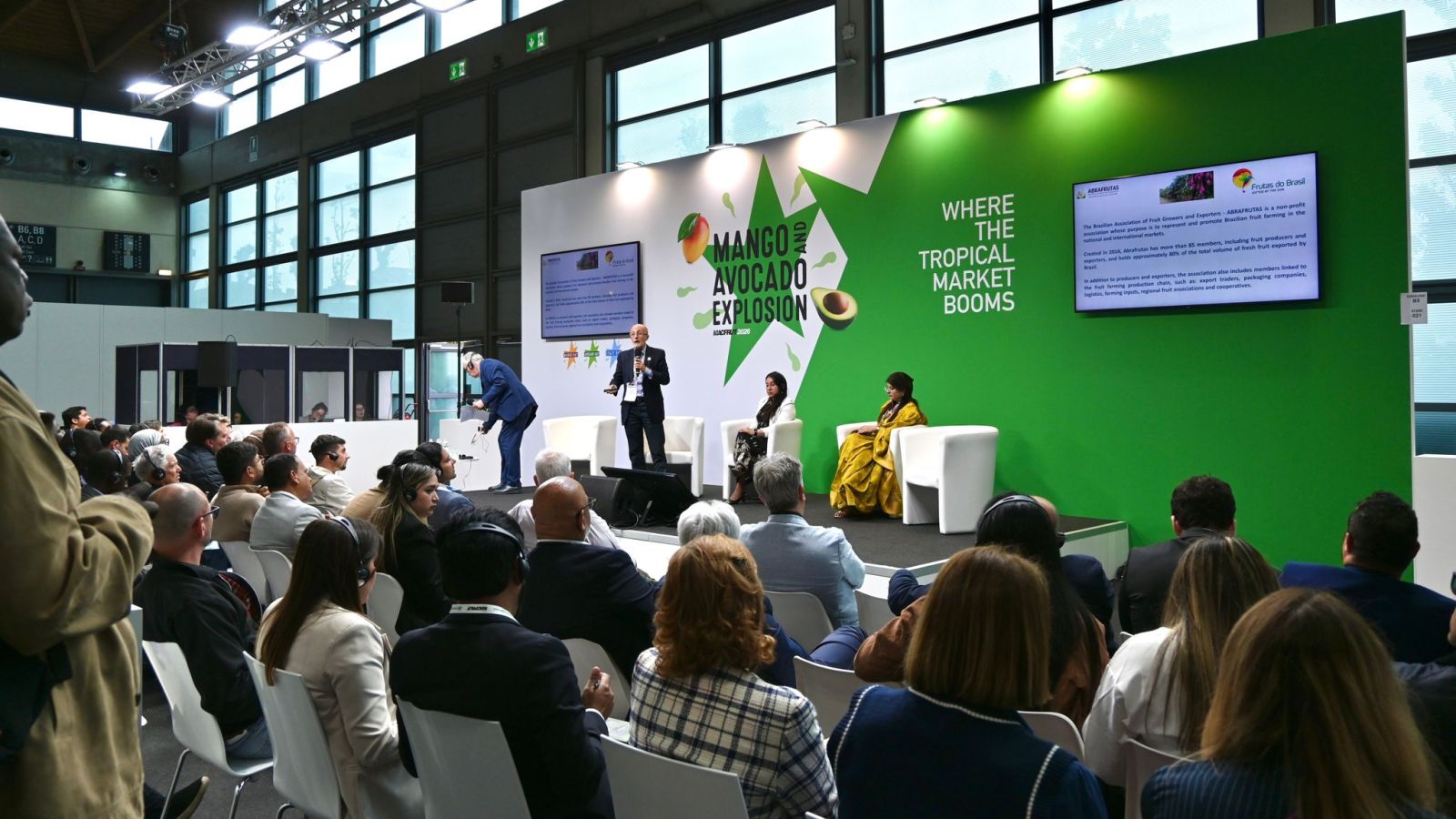
Producer perspectives were provided by Eryvan Pires, CEO of Fruitmarket Agribusiness, who said that mangos have evolved from a simple commodity into a category product focused on consumer experience. A round table moderated by Antonio Felice of Omnibus Comunicazione then looked at production in Brazil, Colombia and India. Jorge De Souza of Abrafrutas highlighted Brazil’s export growth and sustainability efforts, while Gloria Isabel Morales Parra of Fedemango said that Colombia aims to reach 500,000 metric tons of mango exports by 2030. Sehreena Maqbool of India’s Apeda underlined the country’s ambition to expand its exports of mangos — a fruit regarded nationally as the “king of fruits.”
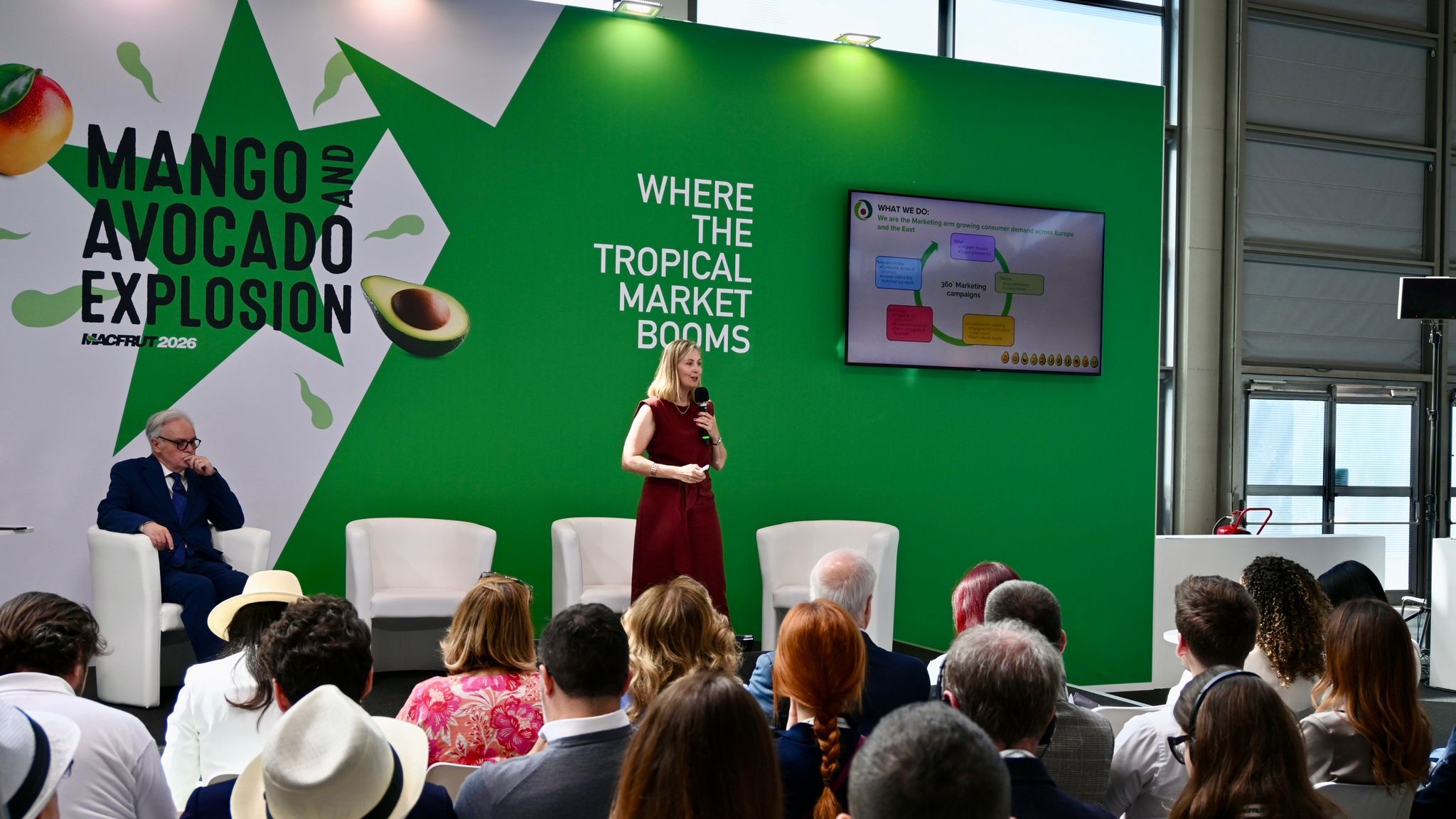
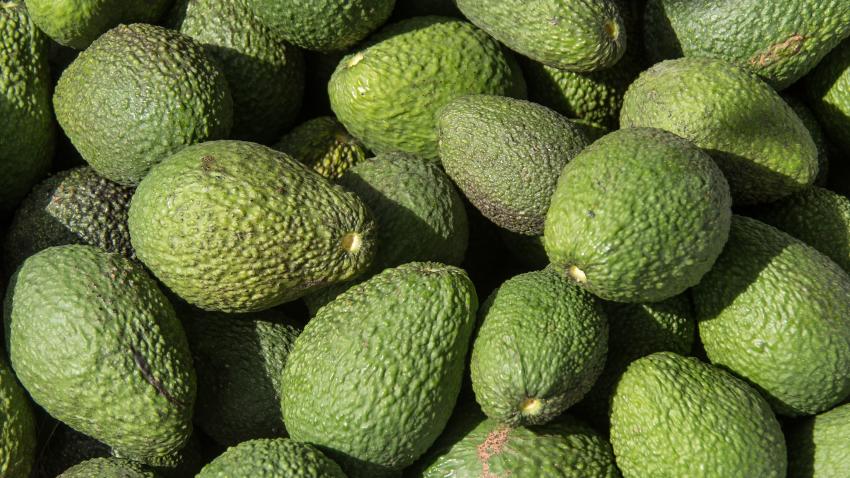
Avocados returned to center stage on the second day of the trade show, when Shelly Vorster, managing director of the World Avocado Organisation, presented an overview of European market growth. Europe imported 1 million metric tons of avocados in 2025, while annual per-capita consumption has risen from 0.8 to 1.8 kilograms over the past decade. In Italy, consumption reached 1.12 kilograms per capita in 2025, confirming the fruit’s increasing popularity among Italian consumers.
According to Vorster, Italy remains a promising market, although high retail prices pose a challenge when it comes to attracting new consumers. A key goal of the WAO is consumer education, with social media channels such as TikTok playing an important role in sharing recipes and usage ideas. Italian retail sales have reached 55,000 metric tons annually, up 28% year on year, while prices have increased by 12%.

The avocado session also featured contributions from Zdenek Honsa of Rolik Group and Karolis Lasys of Mangu Mangas, followed by case studies from Matteo Lesma of Spreafico, Arturo Medina Castro of Peru’s ProHass, Leah Sonkoi Maja of the Fresh Produce Exporters Association of Kenya and Osmar Benitez of the Junta Agroempresarial Dominicana.
The prominence of mangos and avocados was also reflected on the exhibition floor, with the inauguration of the Dominican Republic and Peru stands. Both countries used Macfrut to showcase their role as suppliers of tropical fruit, with representatives emphasizing the quality of their mangos and avocados and taking the opportunity to build direct links with importers and distribution channels.

Together, the forum sessions confirmed mangos and avocados as two of the defining themes of Macfrut 2026: dynamic categories with growing consumer appeal, increasing investment in quality and technology, and significant room for further expansion in the European market.
Images: Macfrut
Topics:


-
September 13, 2026
-
September 13, 2026
-
September 10, 2026
-
September 09, 2026
-
September 07, 2026
-
August 24, 2026
-
August 17, 2026
-
August 20, 2026
-
August 13, 2026
-
August 15, 2026
Upcoming Events

Featured Produce

Produce Marketplace
- ElGhouati Crops · Morocco
- ElGhaoutiCrops · Morocco
- Elangeni Food Group · South Africa
- Hainan ITG Logistics · A26,Haikou
- Joshua Lim · Malaysia
- City fresh fruit co. · Thailand

Add new comment