

You are here
Back to topYunnan Emerging as China’s Next High-End Durian Hub
May 15, 2026
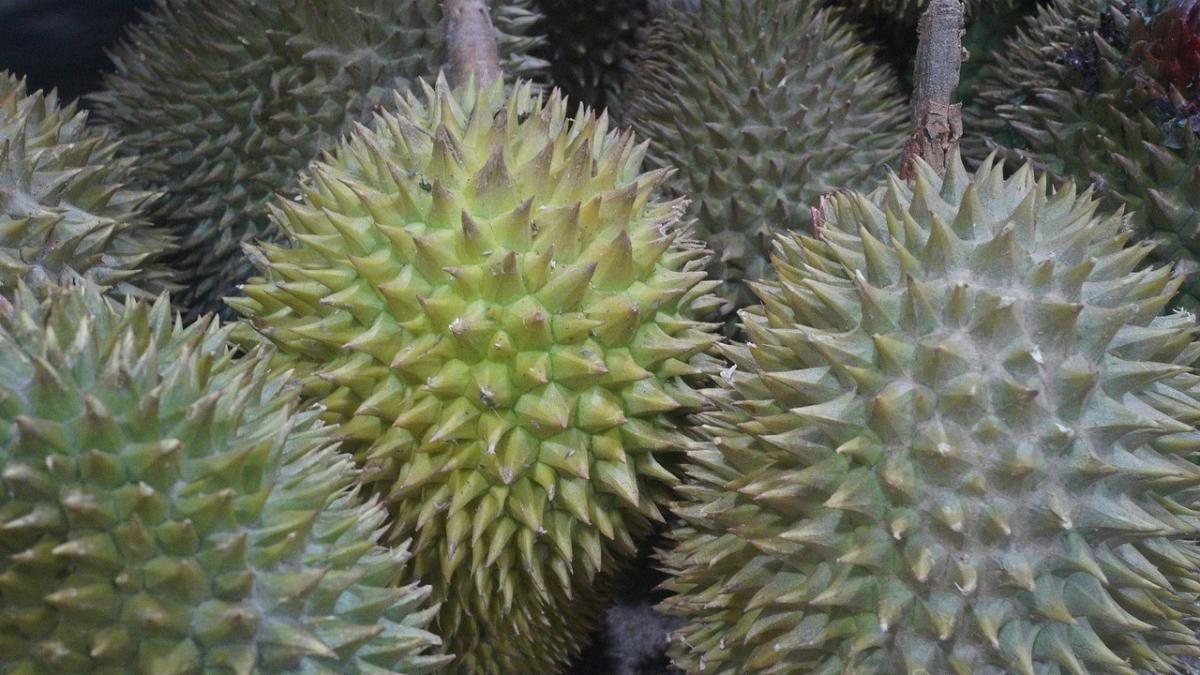


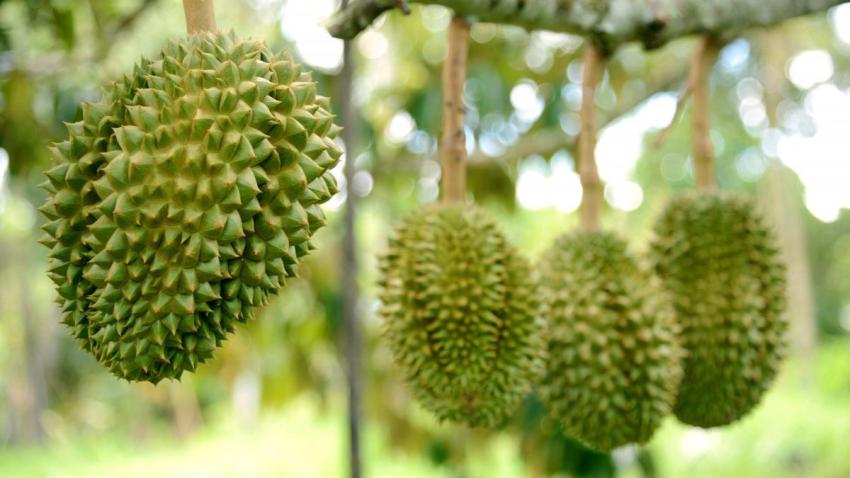
Recently, at the Jinshuihe Mengxin Agricultural Plantation Base (金水河檬鑫农业种植基地) in Jinping County, Honghe Prefecture, Yunnan province, a 3.7-kilogram Monthong durian was harvested at natural ripeness. The fruit came from an eight-year-old grafted tree introduced in 2018. Testing confirmed that it met grade AB standards, with a golden-yellow rind, well-developed spikes and a rich aroma. This demonstrates that Yunnan’s mountainous regions, even those located above a latitude of 22 degrees north, are fully capable of producing high-quality durians.
Beyond this breakthrough in Honghe, large-scale durian cultivation in Xishuangbanna Prefecture has entered a more stable phase of development. As the core production region in Yunnan, Xishuangbanna benefits from an average annual temperature above 20 degrees Celsius, synchronized heat and rainfall, and the absence of typhoons, making it an ideal environment for durian cultivation.
By contrast, durian cultivation in Hainan is frequently affected by typhoons, with trees prone to wind damage, which increases production risks and necessitates carefully selected, sheltered planting sites. In Xishuangbanna and other tropical areas of Yunnan, however, the absence of typhoons allows for greater flexibility in site selection, without the need for additional investment in wind protection. Moreover, Yunnan’s predominantly mountainous terrain provides a slightly wider diurnal temperature range than Hainan, which is more conducive to sugar accumulation and helps enhance fruit quality.
According to the locally released draft version of the “Three-Year Action Plan for the Development of the Durian Industry in Xishuangbanna Prefecture (2026–2028),” the prefecture’s total planting area is projected to reach 12,000 mu (800 hectares) by 2026 — comprising 6,000 mu (400 hectares) in the city of Jinghong, 5,000 mu (333 hectares) in Mengla County and 1,000 mu (approximately 67 hectares) in Menghai County — and to exceed 30,000 mu (2,000 hectares) by 2028.
In Mengla County, 1,000 mu (approximately 67 hectares) of durian plantations have already been established in towns such as Mengman, Mengpeng and Mengban, focusing on premium varieties including Monthong, Musang King and Black Thorn. Meanwhile, Jinghong is also prioritizing high-end varieties, with Musang King plantations being developed in towns such as Menglong and Menghan.
In the town of Mengding, part of the city of Lincang, 106 durian varieties have been introduced, and a 300-mu (20 hectares) durian industrial park has been established. Other regions, including Dehong and Pu’er, are also leveraging their local tropical conditions to conduct trial plantings, gradually expanding the footprint of durian cultivation across Yunnan.
However, despite this strong momentum, several challenges remain. Durian cultivation has stringent environmental requirements. Although Yunnan is free from typhoons, it faces a notable risk of cold snaps, making careful site selection essential, avoiding low-lying areas and prioritizing sun-facing slopes with ample light exposure. In addition, suitable tropical planting zones are limited and often lie close to ecological protection boundaries, making it difficult to secure large, contiguous tracts of land for large-scale development.
At the same time, durian cultivation has a long cycle of five to eight years, with an upfront investment of around 30,000 Chinese yuan per mu (approximately $66,000 per hectare). This results in a lengthy return period and relatively high investment risk. Seedlings still rely heavily on imports, and the establishment of a domestic germplasm resource bank also takes time.
Looking ahead, Yunnan’s durian industry holds considerable promise. Compared with imported fruit, locally grown durians can be harvested after ripening on the tree, offering superior freshness and flavor. Compared with Hainan, Yunnan also enjoys a clear logistical advantage. Hainan-grown durians typically rely on sea or air freight to reach inland markets, resulting in higher transportation costs and longer transit times. By contrast, Yunnan durians can be distributed rapidly via short-distance cold-chain logistics, significantly reducing costs and spoilage while better preserving the freshness and flavor of the tree-ripened fruit.
Yunnan is therefore well positioned to become a core production region for premium, tree-ripened durians in China, gradually supplementing the domestic supply.
Image: Pixabay
This article was translated from Chinese. Read the original article.
Topics:
Regions:
Produce:



-
September 27, 2026
-
September 27, 2026
-
September 23, 2026
-
September 22, 2026
-
September 22, 2026
-
September 15, 2026
-
September 15, 2026
-
August 28, 2026
-
September 02, 2026
-
August 31, 2026
Upcoming Events


Produce Marketplace
- ElGhouati Crops · Morocco
- ElGhaoutiCrops · Morocco
- Elangeni Food Group · South Africa
- Hainan ITG Logistics · A26,Haikou
- Joshua Lim · Malaysia
- City fresh fruit co. · Thailand

Add new comment