

You are here
Back to topPagoda’s Revenue Down 20% in 2025
April 01, 2026
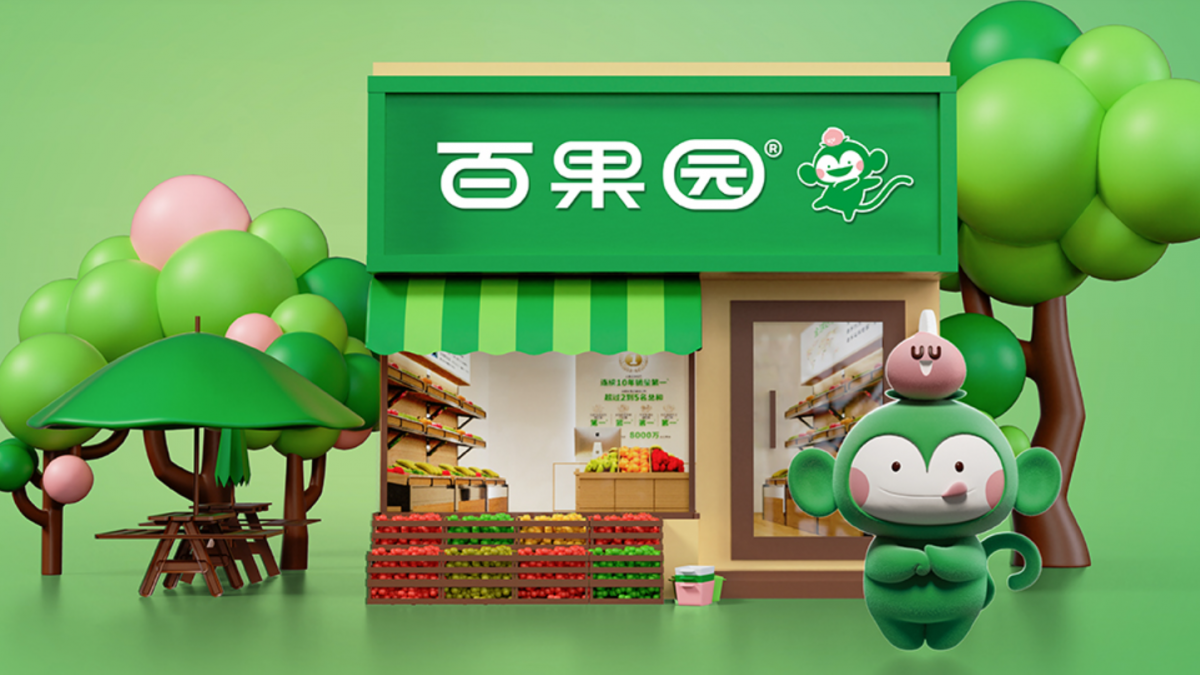


On the evening of March 26, Shenzhen Pagoda Industrial (Group) Corporation Limited, one of China’s biggest fruit retailers, released its annual results for 2025. The company reported a revenue of 8.17 billion Chinese yuan ($1.19 billion) last year, representing a 20.4% year-on-year decrease. The loss attributable to the company’s owners was 317 million yuan ($46.1 million), marking a 17.8% reduction compared with the previous year. The gross profit margin stood at 7.3%, slightly down from 7.4% in 2024.
The report reveals that the number of franchised stores totaled 4,460 in 2025, down from 5,116 in the previous year, reflecting a year-on-year decrease of 12.8%. Of these, the proportion of franchised stores managed by the group increased further to 81.4%. Including a small number of self-operated stores, the total number of stores last year reached 4,468, representing a 12.9% year-on-year decline.
Over 98% of Pagoda’s revenue was generated from the sale of fruits and other food products, with the remainder coming from franchise fees, franchise-related income, membership fees and other sources. Its offline stores are predominantly operated under a franchise model, including both group-managed and entrusted-managed franchises.
Pagoda stated that there had been concerns in the market about a large-scale store closure in the first half of 2025. However, with the completion of store network optimization in the first half of the year, the company’s wave of store closures has officially ended. In the second half of the year, the company resumed its expansion efforts, with a net increase of 82 stores, bringing the total to 4,468 stores and marking a return to a growth track.
In terms of store distribution, the proportion of stores in first-tier cities rose to 25.5%, while the proportion in second-tier cities decreased to 35.8%. Meanwhile, the share of stores in third-tier and lower-tier cities increased to 38.7%.
According to the 2025 China Fruits Industry White Paper recently issued by Frost & Sullivan, third-tier and lower-tier cities accounted for over 36% of China’s fruit market transaction value, with growth rates significantly outpacing those in first- and second-tier cities. As the consumption markets in first-tier and new first-tier cities mature and become saturated, growth has slowed. By contrast, second-tier and lower-tier cities, with their lower consumption bases, offer greater potential for growth and market expansion in the future.
Image: Pagoda
This article was translated from Chinese. Read the original article.
Regions:
Produce:
Related Reads





-
September 28, 2026
-
September 28, 2026
-
September 27, 2026
-
September 27, 2026
-
September 23, 2026
-
September 15, 2026
-
September 15, 2026
-
September 02, 2026
-
August 31, 2026
-
September 01, 2026
Upcoming Events


Produce Marketplace
- ElGhouati Crops · Morocco
- ElGhaoutiCrops · Morocco
- Elangeni Food Group · South Africa
- Hainan ITG Logistics · A26,Haikou
- Joshua Lim · Malaysia
- City fresh fruit co. · Thailand

Add new comment