

You are here
Back to topThailand Strengthens Quality Control on Durians From Southern Producing Regions
July 02, 2026
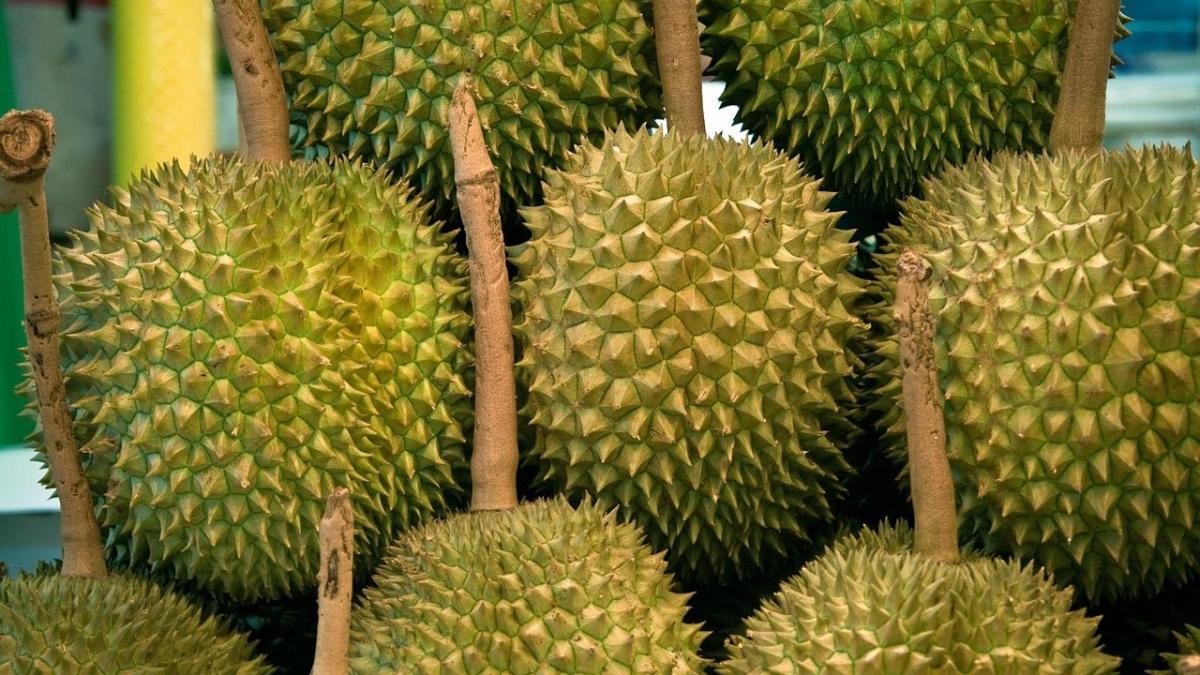


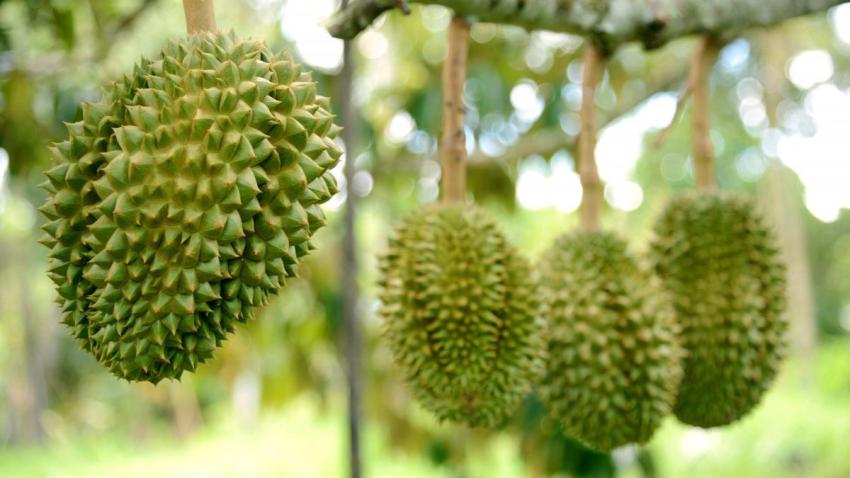
Durian supplies from eastern Thailand are currently declining, while durians from southern Thailand are gradually entering the market. As the main production regions shift southward, Thailand’s Ministry of Agriculture and Cooperatives is intensifying its efforts to strictly control durian quality.
According to a report by Thai media outlet Post Today, the Ministry of Agriculture and Cooperatives has launched a four-level PLUS screening mechanism to address the issue of the durian seed borer (Mudaria luteileprosa). This species belongs to the order Lepidoptera and the family Noctuidae.
Adult female insects lay eggs on the fruit stalk during the young fruit stage. After hatching, the larvae bore into the durian and feed on the seeds, causing severe damage to both the pulp and seeds. Once fully developed, the larvae exit the fruit to pupate, leaving fecal matter inside. This reduces fruit quality and renders the durian unfit for commercial sale.
Most durian-growing areas in southern Thailand are located in mountainous regions with sloping terrain and a humid, rainy climate, making them more susceptible to infestation by durian seed borers compared with other production areas. The four-level PLUS screening mechanism includes inspections at the cultivation source, controls at packing facilities, certification prior to export and post-export tracking, in order to maintain trust among trading partners, particularly in the Chinese market.
Different durian-producing areas are classified using color codes (red, yellow and green) to identify and manage high-risk zones, supported by monitoring measures and attractant light traps installed in these areas. Growers must inspect orchards at least seven days before harvest and isolate durians for at least 24 hours after harvesting.
Packing houses are required to conduct an additional 72-hour quarantine and screening. In addition, durians from high-risk areas are subject to stricter inspections. Every export batch must undergo a minimum 96-hour comprehensive quarantine and screening process before certification and the issuance of phytosanitary certificates.
If the importing country detects seed borers or any abnormalities during export, Thailand’s Ministry of Agriculture and Cooperatives will conduct a traceability investigation within 24 hours, suspend certification for the relevant orchard, packing house or batch, and strengthen regulatory measures for the following season.
The latest data show that Thailand has exported 50,783 durian consignments to China in 2026, totaling 824,831.70 metric tons and 94.729 billion Thai baht ($2.85 billion). Among them, exports from southern Thailand accounted for 8,699 consignments, totaling 141,753.96 metric tons, with a value of 15.863 billion baht ($477 million).
Image: Pixabay
This article was translated from Chinese. Read the original article.
Topics:
Produce:


-
September 29, 2026
-
September 28, 2026
-
September 28, 2026
-
September 27, 2026
-
September 27, 2026
-
September 15, 2026
-
September 15, 2026
-
September 02, 2026
-
September 13, 2026
-
September 01, 2026
Upcoming Events


Produce Marketplace
- ElGhouati Crops · Morocco
- ElGhaoutiCrops · Morocco
- Elangeni Food Group · South Africa
- Hainan ITG Logistics · A26,Haikou
- Joshua Lim · Malaysia
- City fresh fruit co. · Thailand

Add new comment