

You are here
Back to topSouth Africa’s 2026/27 Stone Fruit Exports Set for Mixed Performance
November 12, 2026
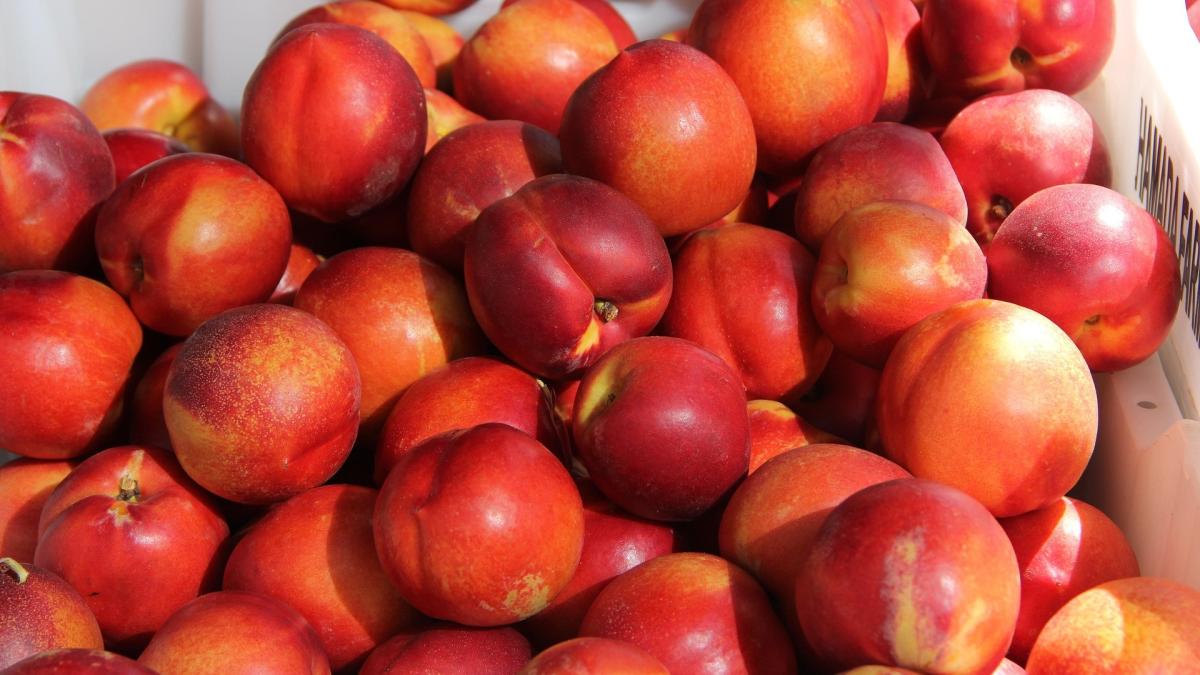


South Africa’s 2026/27 stone fruit export season has officially begun one to two weeks earlier than last season, according to a recent report from Hortgro, the industry association representing South African deciduous fruit producers. The total export volume is forecast to decline by 3% compared with last season, although trends are expected to vary across categories. Nectarine exports are anticipated to increase, apricot exports are forecast to remain largely stable, and peach and plum exports are expected to decline.
Fresh peaches, nectarines, plums (including sugar plums) and apricots from South Africa gained market access to China in November 2025, with the first shipments of South African sugar plums and nectarines arriving in February 2026. Although these first shipments arrived when the season was already more than halfway through, data from China’s General Administration of Customs show that China imported a total of 250.6 metric tons of fresh plums (including sugar plums) and 19.4 metric tons of fresh peaches and nectarines from South Africa during the first export season.
South Africa’s stone fruit-growing regions experienced relatively dry conditions during the Southern Hemisphere winter of 2026. However, significant rainfall and storm activity in May helped improve dam water levels across several key production areas in the Western Cape. Fruit development was also notably ahead of schedule, with early-season fruit reaching maturity approximately two weeks earlier than usual.
The 2025 Tree Census revealed varying trends in South Africa’s stone fruit planted area between 2020 and 2025. The area planted to fresh-market apricots remained relatively stable, declining by just 4%. By contrast, the area planted to fresh-market peaches decreased by 22%, while plum plantings fell by 8%. Meanwhile, nectarine plantings expanded by 28%, with the most significant growth occurring between 2021 and 2022. This expansion has contributed to the substantial growth in South African nectarine export volumes in recent years.
Hortgro’s latest export forecasts for South Africa’s 2026/27 stone fruit season are as follows:
Apricots
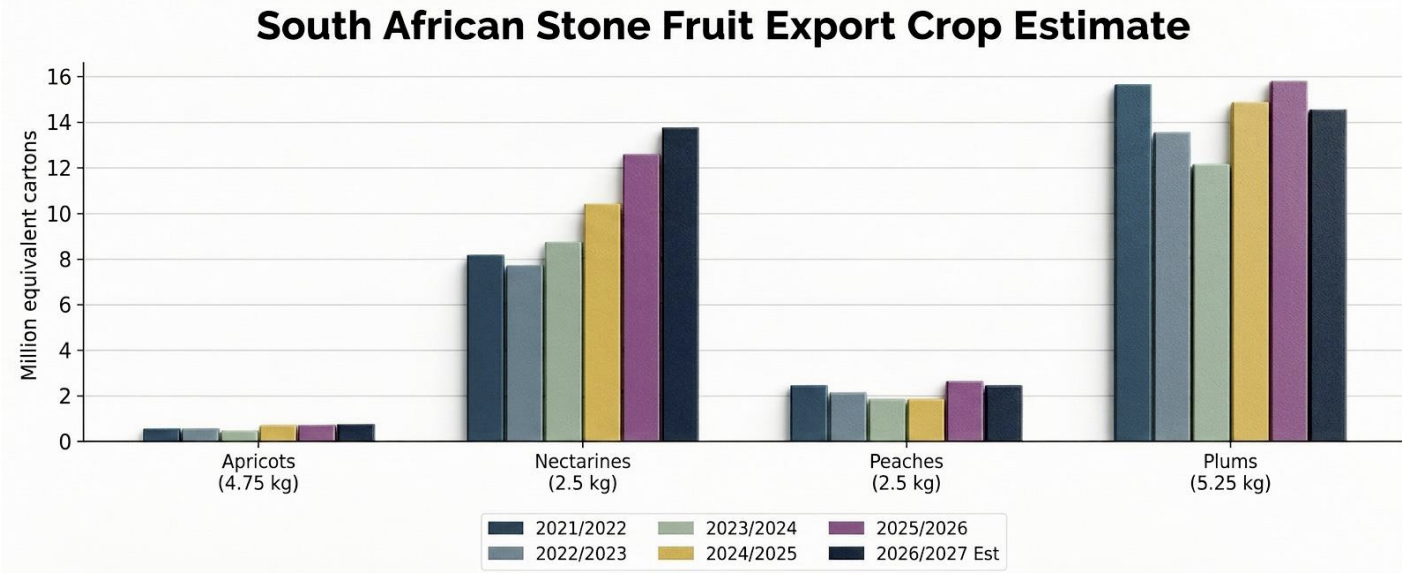
The planted area remains relatively stable, and fruit is expected to be larger this season than in the previous one. Exports are forecast at 766,000 cartons (4.75 kilograms per carton), up 2% from the 750,000 cartons recorded in the 2025/26 season.
Peaches
Fruit set in the main production regions has been normal, although exports of most varieties from the Western Cape’s Ceres region are expected to be lower. Peach exports are forecast at 2.48 million cartons (2.5 kilograms per carton), down 7% from the 2.66 million cartons seen in the 2025/26 season.
Nectarines
Unlike in previous years, nectarine development in the Western Cape is ahead of that in the northern production regions this season. New nectarine varieties generally reach full production sooner than traditional varieties, supporting overall output growth. Fruit set has been good across several production regions, indicating strong early-season crop potential. Exports are forecast at 13.81 million cartons (2.5 kilograms per carton), up 9% from the 12.62 million cartons registered in the 2025/26 season.
Plums
Fruit set reports vary across production regions and varieties, but overall indications point to a slight decline in plum exports. Exports are forecast at 14.58 million cartons (5.25 kilograms per carton), down 8% from the 15.85 million cartons recorded in the 2025/26 season.
Cherries
Hortgro did not update its cherry export forecast in the current report. However, its forecast released in early October indicated that cherry production was expected to decline by 10–15% from last season’s 490,000 cartons (5 kilograms per carton). In an interview published by Farmer’s Weekly, a South African agricultural publication, the association suggested that export volumes could fall by as much as 30%.
Clive Garrett, marketing manager at ZZ2, a cherry producer in northern South Africa, said that the company began harvesting cherries in early October and completed the harvest by the end of the month. As South African cherries have yet to gain formal market access to China, exporters in the northern production regions are expected to miss out on the Chinese market this season.
Images: Pixabay (main image), Hortgro (body image)
This article was based on a Chinese article. Read the original article.
Topics:
Regions:



-
November 12, 2026
-
November 12, 2026
-
November 11, 2026
-
November 11, 2026
-
November 10, 2026
-
October 20, 2026
-
October 19, 2026
-
October 21, 2026
-
October 27, 2026
-
October 14, 2026
Featured Produce

Produce Marketplace
- Pujiang Tangguo Agri · China
- Pujiang Tangguo Agri · China
- Pujiang Tangguo Agri · China
- Hainan ITG Logistics · A26,Haikou
- Joshua Lim · Malaysia
- City fresh fruit co. · Thailand

Add new comment