

You are here
Back to topChina’s Tree Nut Production Forecast To Reach 1.92 Million Metric Tons in 2026/27
October 28, 2026


The U.S. Department of Agriculture’s Foreign Agricultural Service recently released its China: Tree Nuts Annual report. According to the report, China’s total tree nut production in the 2026/27 season is projected to reach 1.92 million metric tons, with the country leading the world in terms of both walnut and macadamia production. Rising domestic supply, weak consumer demand amid economic pressures, and high tariffs on U.S. nuts are expected to cut imports of most tree nuts, with only almonds likely to rebound. Although China’s overall tree nut exports remain limited, walnut exports have performed strongly: in-shell shipments to its main markets have grown more than tenfold since 2018, and walnut kernel exports have increased even faster.
Production Forecast at 1.92 Million Metric Tons
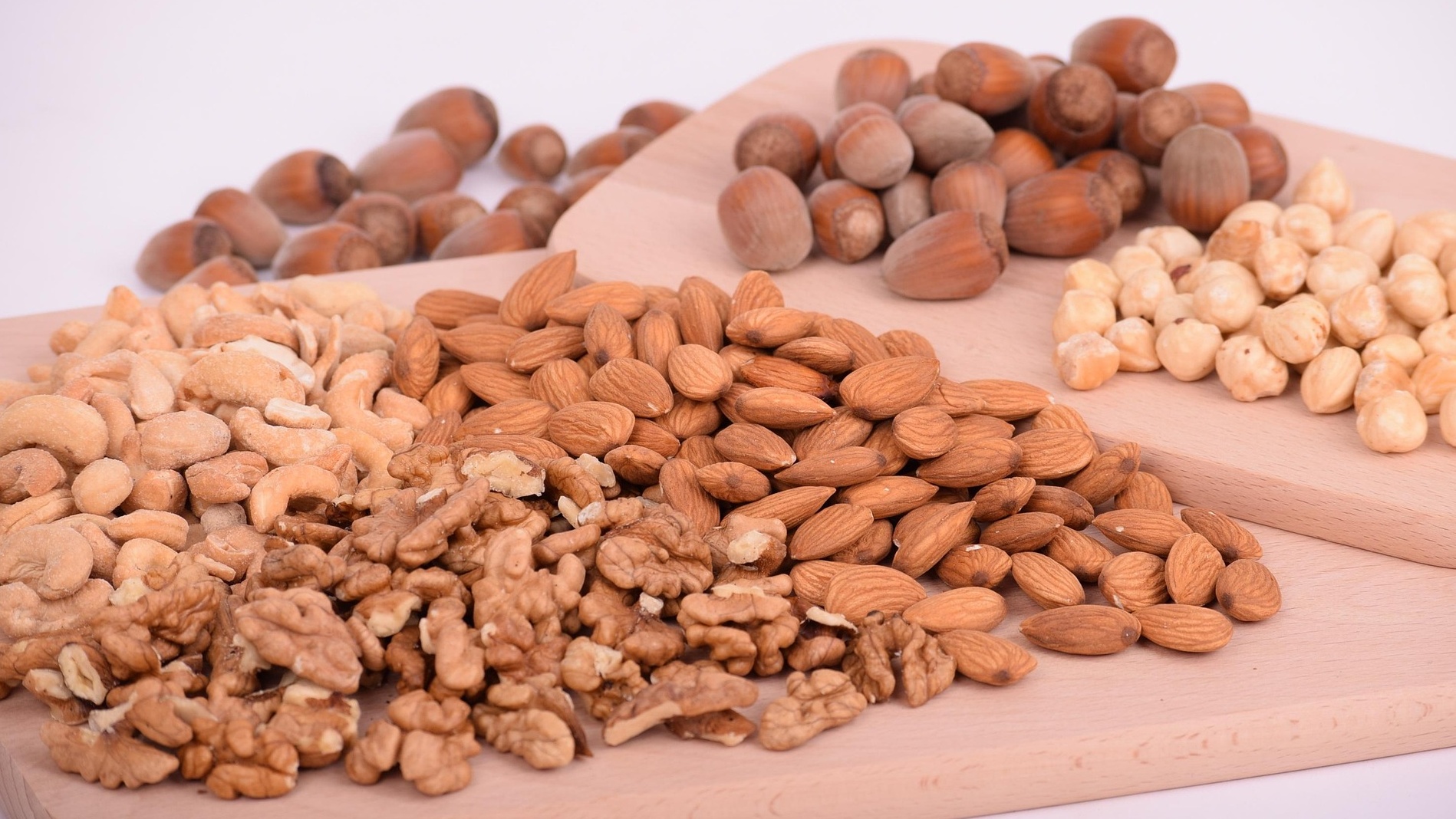
According to the International Nut and Dried Fruit Council, China remains one of the world’s largest tree nut producers, with production growing at an average annual rate of 9% over the past 15 years. In the 2026/27 season, China’s total tree nut production is forecast to reach 1.92 million metric tons (in-shell basis). Walnut production is estimated at 1.6 million metric tons, up by 7% year on year, keeping China firmly in first place globally. China is also the world’s largest macadamia producer. According to the report, the growth in domestic production is primarily attributable to existing orchards maturing and reaching peak production, improved crop management and varieties, and favorable weather in some growing regions.
Xinjiang and Yunnan remain China’s core walnut-growing regions, but conditions in the two provinces differ significantly. Xinjiang’s orchards are larger and flatter, and the advantages of mechanization help keep costs down. In Yunnan, high altitudes, an aging workforce and labor shortages have pushed harvesting costs up to 1.0–1.6 Chinese yuan ($0.15–0.24) per kilogram.
Strong Growth for Macadamias, Hazelnuts and Pecans
Macadamias, hazelnuts and pecans are the fastest-growing categories. In-shell macadamia production in 2026/27 is expected to reach 110,000 metric tons, up by 12% year on year. China has around 380,000 hectares of macadamia orchards, making it the world’s largest macadamia producer, with approximately 62% of the global planted area and 29% of global production. Yunnan accounts for nearly 80% of national output, followed by Guangxi and Guangdong. However, the industry still relies on more than 200,000 small-scale farmers, and mountainous terrain makes mechanization difficult. Weather events such as typhoons present an additional risk. The industry is now expected to focus more on standardization and variety upgrades.
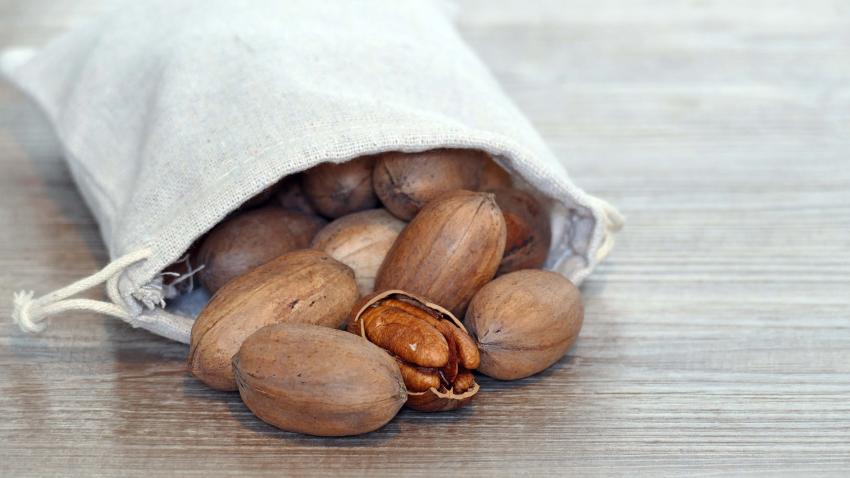
In-shell hazelnut production is forecast at around 100,000 metric tons, up by 16% year on year. Liaoning and other traditional growing areas in northeast China remain the main producers, while emerging regions such as Xinjiang are expected to increase their share. With large numbers of young trees coming into production and low-yielding orchards being rehabilitated, output is expected to keep rising. Pecan production is projected to double to 12,000 metric tons. Pecans are grown on around 80,000 hectares in Anhui, Jiangsu, Yunnan and other provinces, but many of the trees have yet to start bearing nuts.
Almonds are one of the few categories in decline. Shelled almond production is forecast at 21,000 metric tons in 2026/27, down nearly 5% year on year. Xinjiang’s almond planted area has fallen by about 60% since 2021, which is mainly attributable to spring frosts, competing crops and farmland policies. The region is pursuing a five-year action plan focused on variety improvement, better use of water resources and renovation of old orchards.
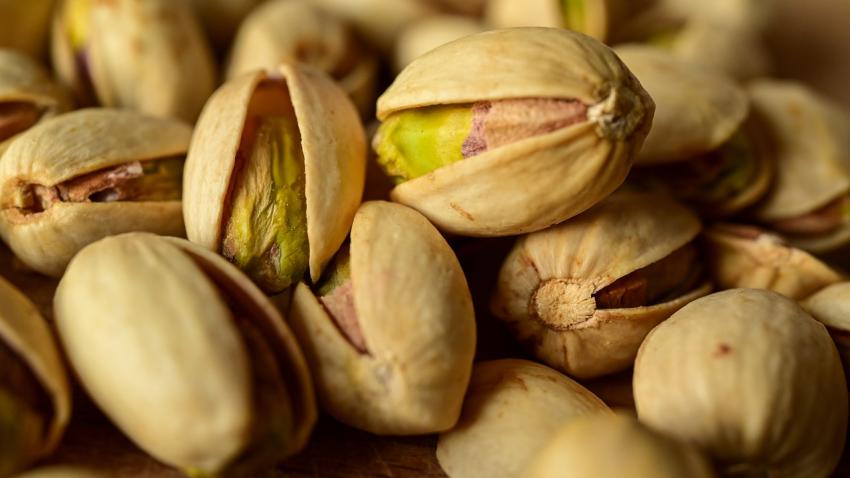
Pistachio production is anticipated to remain stable at around 300 metric tons, with commercial cultivation still at the trial planting stage. Pistachios are grown on nearly 5,300 hectares in southern Xinjiang, but low winter and spring temperatures, limited water resources, and a lack of suitable varieties continue to hinder large-scale production.
Walnut Prices Under Pressure, Mixed Trends for Imports
The walnut market shows a clear price divide. High inventories of standard in-shell walnuts are putting pressure on prices, while tight supplies of high-quality walnut kernels have kept their prices relatively stable. The purchase price for new-season in-shell walnuts in Yunnan stands at around 12 yuan ($1.80) per kilogram, down by about 20% year on year. Walnut prices have fluctuated significantly over the past two years: at the start of the 2025/26 season, low inventories and reduced global production pushed prices up by around 25%, and demand ahead of Chinese New Year drove them higher still.
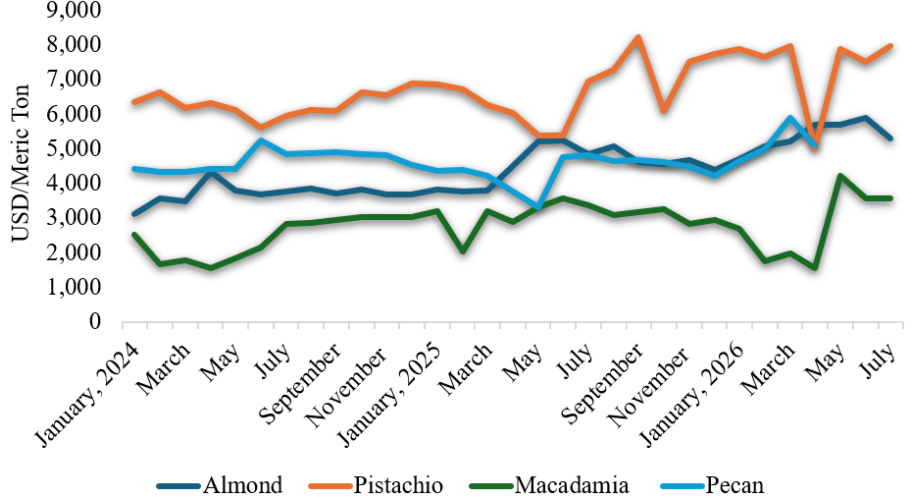
Prices for imported tree nuts have been mixed. Almond, pistachio and pecan prices rose in 2025/26 and have stayed high owing to tight supplies, shipping disruptions and higher transportation costs. Macadamia prices, by contrast, have fallen as global supply has increased. African macadamias have also become cheaper since May 1, 2026, when China eliminated tariffs on imports from all African countries with which it has diplomatic relations.
Consumption Edges Up but Remains Low per Capita
China’s domestic tree nut consumption is forecast to increase slightly in 2026/27. Lower imports will leave some supply gaps, but rising domestic production is expected to offset some of the shortfall, particularly in the case of walnuts. China’s per-capita tree nut consumption is currently estimated at just 0.5 kilograms, far below the 2.6 kilograms in the United States and 2.7 kilograms in Australia, leaving substantial room for long-term growth.
Traditional snacks remain the main consumption channel, but tree nuts are increasingly being used in food processing and food service. Sliced nuts, nut flours and nut butters are seeing growing use in baked goods, restaurant dishes, plant-based drinks, milk tea and coffee, shifting consumption away from holiday gifts and simple roasted snacks toward everyday use and use as ingredients.
Imports: Most Categories Down, Almonds To Rebound
China produces enough walnuts and hazelnuts to meet domestic demand but relies heavily on imports for other tree nuts, particularly almonds, pistachios and pecans. Imports of most tree nuts are forecast to decline in 2026/27. In 2025/26, imports of pistachios, macadamias, hazelnuts and pecans had already fallen, reflecting weak consumer demand amid economic pressures and higher tariffs.
Walnut imports are expected to remain limited. China imported around 1,888 metric tons of in-shell walnuts in 2025/26, mainly from Australia and the United States, primarily for the high-end market.
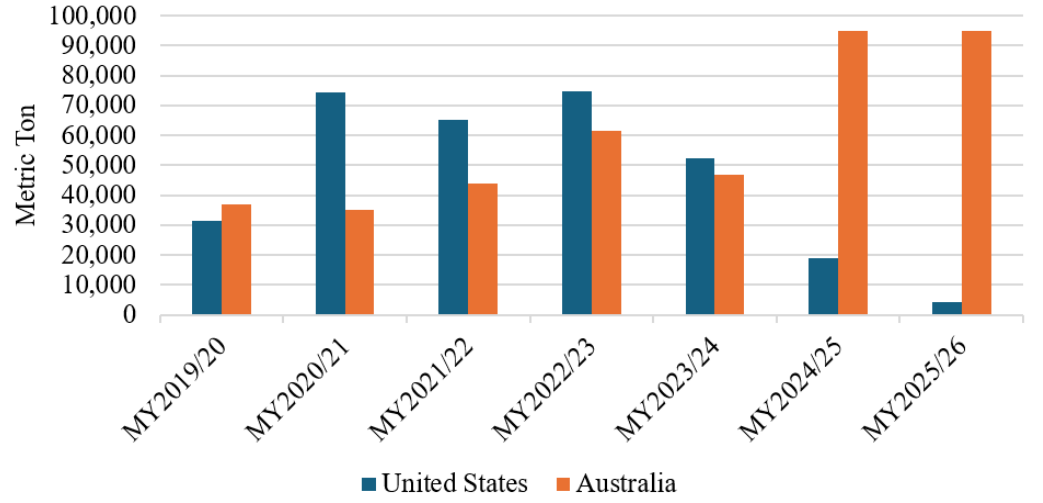
China is the world’s third-largest importer of almond kernels, and its imports are expected to rebound in 2026/27 on improved supplies from Australia. In 2025, Australia accounted for 95% of China’s almond imports, overtaking the United States as the largest supplier thanks to the two countries’ free trade agreement. Imports of U.S. almonds are expected to recover moderately in 2026/27, but higher tariffs continue to restrict direct trade.
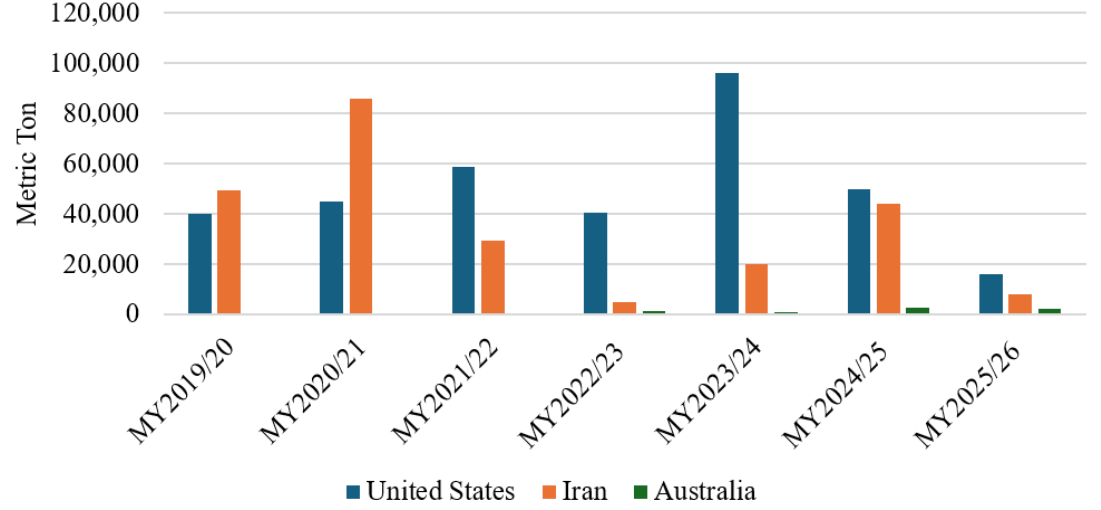
Global pistachio supply is forecast to fall by 33% in 2026/27, as the two major suppliers, the United States and Iran, are both likely to see smaller crop harvests. International prices could rise by 25% to 40%. China’s pistachio imports, which fell by nearly 70% year on year in 2025, are expected to continue declining.
With domestic production rising, macadamia imports are anticipated to continue declining. China’s imports fell by 38% to 42,000 metric tons in 2025/26, with South Africa and Australia remaining the main suppliers. Pecan imports are also expected to fall, largely because of lower shipments from the United States and Mexico, which have been subject to provisional anti-dumping duties since Aug. 11. South Africa, the main supplier of in-shell pecans, is unlikely to fully make up the shortfall.
Walnuts Dominate Exports, Middle East the Top Market
Walnuts account for more than 80% of China’s tree nut exports. Despite higher transportation costs, walnut exports are expected to grow moderately in 2026/27. The Middle East (particularly the United Arab Emirates) is the largest destination, followed by Turkey, Central Asia and North Africa. In-shell shipments to these markets have grown more than tenfold since 2018, and walnut kernel exports have grown even faster, mainly to West Asia, Central Asia and Europe. Total walnut exports (in-shell basis) reached nearly 360,000 metric tons in 2025/26.
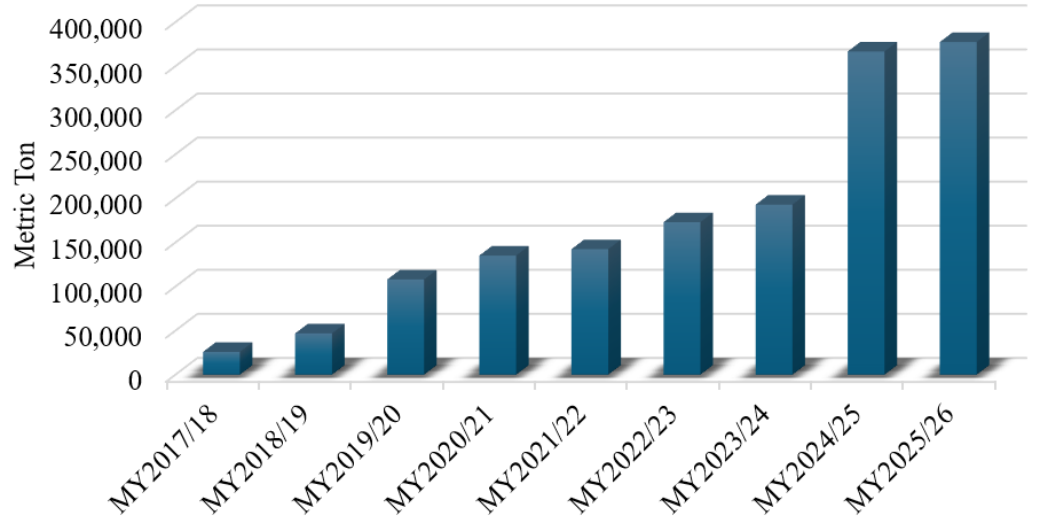
Exports of Chinese-grown macadamias, hazelnuts and pecans remain limited, but China plays a re-exporting role for pistachios and some other nuts, importing them in-shell, shelling them domestically and re-exporting them to third markets.
Overall, China’s tree nut market is entering a new phase, with domestic production rising and domestic supply increasingly replacing imports. Future market growth is expected to depend increasingly on product innovation, new applications and more frequent consumption. Diverging trends across different nuts, price volatility and shifting supply sources will be key factors for market participants to watch.
Images: Pixabay (main image), U.S. Department of Agriculture (body images)
This article was translated from Chinese. Read the original article.
Topics:
Regions:
Related Reads




-
October 28, 2026
-
October 28, 2026
-
October 27, 2026
-
October 27, 2026
-
October 25, 2026
-
October 06, 2026
-
September 29, 2026
-
September 28, 2026
-
October 09, 2026
-
October 07, 2026

Produce Marketplace
- Pujiang Tangguo Agri · China
- Pujiang Tangguo Agri · China
- ElGhouati Crops · Morocco
- Hainan ITG Logistics · A26,Haikou
- Joshua Lim · Malaysia
- City fresh fruit co. · Thailand

Add new comment