
China Customs Updates Phytosanitary Requirements for Myanmar Bananas [1]
Submitted by Jing Zang [2] on
On July 28, 2026, the General Administration of Customs of China issued Announcement No. 109 [3], replacing the previous Announcement No. 49 of 2022 [4] and updating the import requirements for fresh bananas from Myanmar. The new phytosanitary requirements will come into effect on Sept. 1, 2026.
In December 2019, China and Myanmar signed a memorandum of understanding to facilitate the official export of bananas from Myanmar to China, with market access [5] granted in June 2022. Bananas are among Myanmar’s leading fruit exports, and China has remained its largest export destination for years. Before gaining official market access, Myanmar bananas mainly entered China through border trade channels.
Since the political upheaval in Myanmar in 2021, ongoing domestic instability has periodically disrupted banana production, transportation and exports, although conditions have improved over the past two years. From April 2025 to January 2026, Myanmar exported 157,200 metric tons of bananas to China through the Kan Paik Ti border crossing in Kachin State, down 45.4% from the 287,900 metric tons registered during the same period a year prior. Exports from some plantations and companies were temporarily suspended after pesticide residues were detected in their products, with only compliant exporters allowed to continue shipments through designated channels.
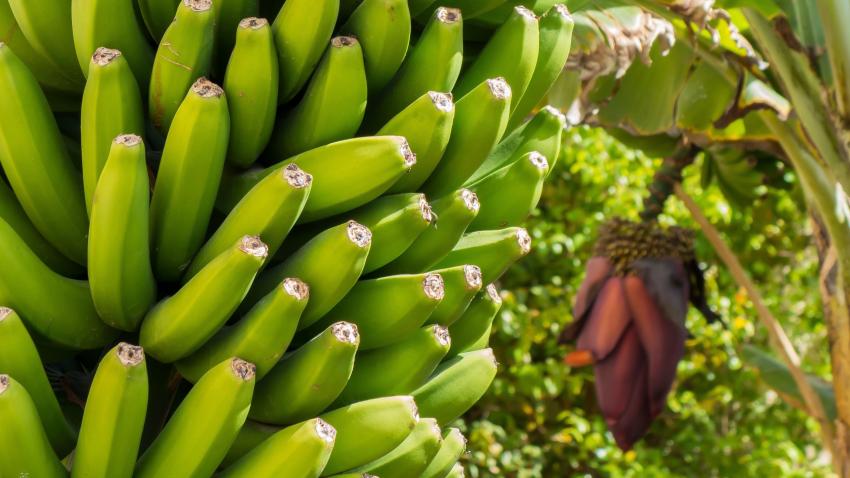
Under the updated GACC requirements, only immature green bananas harvested 10 to 11 weeks after flowering are eligible for export to China, while fully ripe yellow bananas are prohibited from entering the market.
The quarantine pests of concern to the Chinese side remain unchanged and include the giant African land snail (Achatina fulica), spiraling whitefly (Aleurodicus dispersus), Malaysian fruit fly (Bactrocera latifrons), gray pineapple mealybug (Dysmicoccus neobrevipes), coffee mealybug (Planococcus lilacinus), passionvine mealybug (Planococcus minor) and the Panama TR4 fungal disease (Fusarium oxysporum Schlecht f. sp. cubense Race 4).
Orchards intending to export fresh bananas to China must also establish robust quality management and traceability systems, adhere to good agricultural practices and implement integrated pest management techniques. Meanwhile, the new announcement specifies the monitoring and control requirements for mealybugs and the Panama TR4 fungal disease.
The updated announcement also provides more detailed operational and traceability requirements for packing facilities. During processing, bananas must undergo washing, manual sorting, grading and other procedures to ensure that they are free from insects, mites, snails, decayed fruit, weed seeds, plant debris and soil. If packed bananas require storage prior to export, they must be transferred to storage facilities immediately and kept separately to prevent pest re-infestation.
Packing facilities are also required to establish a traceability system that allows each shipment exported to China to be traced back to its registered orchard of origin. Records must include the processing and packing dates, the name or registration number of the supplying orchard, the quantity of bananas processed, export date, export volume, destination country, vehicle or container number, and seal number. If chemicals are applied during processing, records must also include the product name, active ingredient, application rate and date of application. All records must be retained for at least two years.
Moreover, Myanmar’s Ministry of Agriculture, Livestock and Irrigation is required to conduct sampling inspections for each shipment, covering no less than 1% of each batch. If any quarantine pests of concern or soil are detected, the entire shipment will be prohibited from export to China. The relevant orchard or packing facility must immediately suspend exports to China until the cause has been identified and effective corrective measures have been implemented. All relevant records must be properly maintained and provided to Chinese authorities upon request.
Image: Pixabay
This article was translated from Chinese. Read the original article [6].
