
New Zealand Avocado Export Map Shifts as China Imports Double [1]
Submitted by Jing Zang [2] on
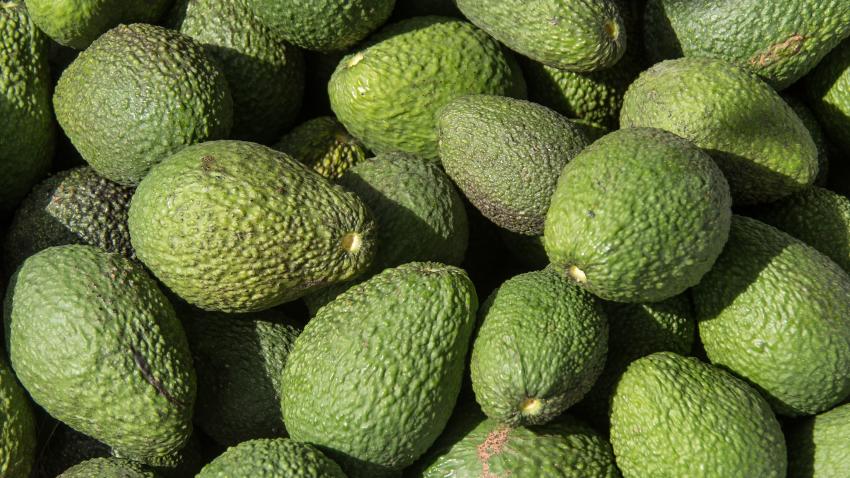
According to Rabobank’s latest Global Avocado Update 2026 [3] report, New Zealand’s avocado industry [4] is accelerating its expansion into Asian markets to offset the continued decline in exports to Australia [5]. During the 2025/26 season (September to March), New Zealand’s total avocado exports [6] reached approximately 3.445 million trays, representing a year-on-year decline of around 9%.
Report co-author and Rabobank senior analyst Jen Corkran noted that Australia remains New Zealand’s largest avocado export market, accounting for 22% of total exports. However, shipments to Australia have been declining and New Zealand’s reliance on this market has decreased significantly compared with five years ago, when Australia accounted for more than two-thirds of the country’s avocado exports.
To offset this weaker demand from Australia, New Zealand is actively expanding into Asian markets and has made notable progress. During the 2025/26 season, exports to South Korea increased by 70% year on year to 625,000 trays. Shipments to mainland China, Hong Kong and India nearly doubled, while exports to Taiwan rose by 50%. Asia is increasingly becoming a key growth driver for New Zealand’s avocado exports.
On the global market front, avocado exports continue to follow a steady growth trajectory, driven by production expansion in both traditional avocado-growing regions and emerging producing countries. Global avocado exports have increased from 730,000 metric tons in the 2010/11 season to more than 3.3 million metric tons in the 2025/26 season. Mexico and Peru have been the primary contributors to this growth, while exports from countries such as Kenya [7], Spain, Colombia and South Africa have also continued to expand. The report forecasts further growth in global avocado supply for the 2026/27 season. However, the developing El Niño phenomenon could increase uncertainty around production volumes and fruit sizing across different growing regions, potentially exacerbating seasonal supply/demand imbalances and market volatility.
Global avocado demand is exhibiting a clear “dual-speed dynamic”: consumption growth in mature markets is slowing, while demand in emerging markets continues to expand rapidly. In terms of annual per-capita availability, Mexico and Chile remain the leading markets, at approximately 14 kilograms and 9 kilograms per person, respectively, although their future growth potential is becoming increasingly limited. Meanwhile, the European Union’s per-capita avocado availability reached 2.24 kilograms in 2025, highlighting substantial room for further consumption growth and indicating that avocados are gradually shifting from a niche product to a mainstream fruit.
In 2024, mainland China imported approximately 48,984 metric tons of avocados with an import value of $122 million. In 2025, the import volume increased to 64,679 metric tons, while the import value reached $145 million, representing year-on-year growth of approximately 32.0% and 18.9%, respectively. The faster growth in import volume compared with import value indicates a decline in the average import price. This reflects the continued improvement in the acceptance of avocados among Chinese consumers, while also aligning with the broader global trend of ample supply and more reasonable pricing.
From a channel perspective, avocado consumption in China is highly concentrated in modern tea beverages and foodservice applications, such as smoothies, salads and healthy/light meals. By contrast, retail channels have developed more slowly owing to challenges in ripeness management and relatively high retail prices. There remains considerable room for further market education and growth in supermarket and retail consumption.
Image: Pixabay
This article was translated from Chinese. Read the original article [8].
