
Turkey Imports More Chinese Walnuts as Pistachio Prices Climb [1]
Submitted by Roy G [2] on
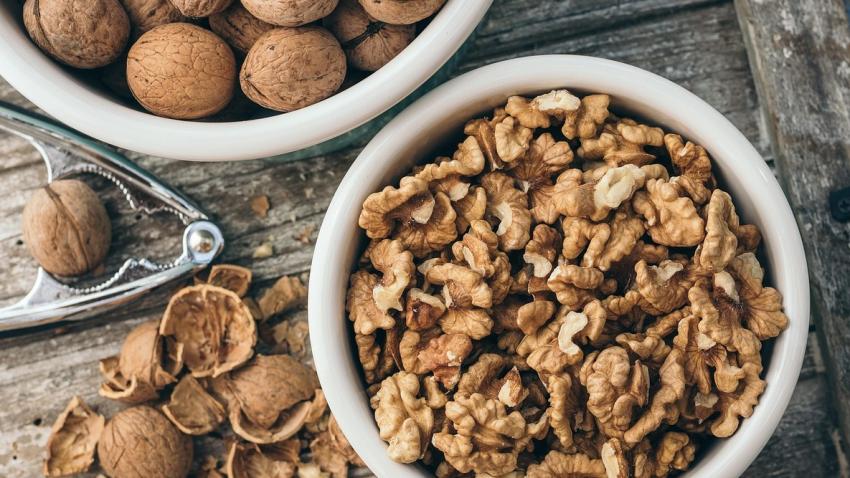
Turkey’s pistachio production is forecast to rise by nearly 10% to 130,000 metric tons in the 2026/27 season, according to the latest Türkiye: Tree Nuts Annual [3] report from the U.S. Department of Agriculture’s Foreign Agricultural Service. Although 2026/27 is an on-year, the harvest will fall far short of the record 385,000 metric tons observed in 2024/25. Pistachio prices are still rising, which has made walnuts a cheaper alternative and boosted imports of Chinese walnuts. In 2025, the value of China’s in-shell walnut exports to Turkey rose by 38%, while walnut kernel exports rose by 70%. China and the United States are now tied as Turkey’s largest walnut suppliers.
Pistachios: A Modest On-Year, With Re-Exports Dominating Trade
Market sources say that Turkish pistachio trees are still worn out from the record 2024/25 harvest coupled with last season’s frost, and localized hail this spring caused further damage. Some sources even regard 2026/27 as more of an off-year and anticipate a large crop next season. Production is highly concentrated: Gaziantep and Sanliurfa provinces account for 80% of national output; Adiyaman, Siirt, Kilis and other southeastern provinces account for another 15%; and the rest is scattered across the Aegean, Mediterranean and Marmara regions. The Antep variety makes up 85% of production, with most of the remaining 15% being the Siirt variety. Both are unique to Turkey and differ in size and shape from the varieties cultivated in Iran [4] and the United States [5]. Siirt produces higher yields and varies less between on- and off-years, and growers have been planting more of it in recent years.
Turkey’s pistachio exports [6] in 2026/27 are forecast at 40,000 metric tons. However, most of these pistachios are not grown in Turkey but rather imported from the United States and Iran, processed, sorted and packed in free trade zones, and re-exported. The main export destinations include Syria, Italy, Iraq, Germany, Jordan, Kazakhstan and Algeria.
Walnuts: High Tariffs Fail To Curb Import Demand, With China and the United States Tied as Top Suppliers
Walnuts are grown in almost every province of Turkey, but commercial orchards are still relatively new and production falls far short of domestic demand. Turkey’s 2026/27 walnut production is forecast at 48,000 metric tons, while consumption is expected to rise slightly to 140,000 metric tons, as higher pistachio prices make walnuts a cheaper option for some desserts.
Imports are predicted to rise to 140,000 metric tons, but not all of these are consumed in Turkey. Turkish traders make heavy use of the inward processing regime, under which walnuts imported for processing and packing and then re-exported are not subject to import duties. As a result, Turkey is both a major importer and a major exporter of walnuts, with exports forecast at 48,000 metric tons in 2026/27.
For exporters hoping to sell into Turkey’s domestic market, tariff barriers remain high. The most-favored-nation tariff on both in-shell and shelled walnuts was raised from 15% to 20% on Feb. 1, 2026. Since July 2026, importers have also paid a higher additional financial responsibility tax of $738 per metric ton for in-shell walnuts and $1,772 per metric ton for shelled walnuts, and customs applies minimum reference prices. Walnuts from the United Arab Emirates benefit from a preferential tariff of 2% and a much lower additional tax.
In 2025/26, the United States and China [7] were Turkey’s two largest walnut suppliers, shipping nearly identical volumes, followed by Chile, the European Union, Kyrgyzstan and Moldova. Because of pricing and seasonality, U.S. walnuts face growing competition from China and Chile. According to traders, Chinese walnuts are cheaper, which is a big advantage when Turkey’s economy is struggling. Although Chinese walnuts are considered lower in quality than U.S. and Chilean walnuts, many Turkish consumers find them acceptable.
According to Chinese customs data, in 2024, China exported about 35,200 metric tons of in-shell walnuts to Turkey worth 479 million Chinese yuan ($71.9 million), alongside about 11,500 metric tons of walnut kernels worth 350 million yuan ($52.5 million). In 2025, this increased to about 40,200 metric tons of in-shell walnuts worth 662 million yuan ($99.3 million) and about 17,700 metric tons of walnut kernels worth 596 million yuan ($89.4 million). Turkey is now China’s second-largest walnut export market after the United Arab Emirates. Exporters of Xinjiang 185 walnuts [8], a thin-shelled variety from China’s Xinjiang province, have built a steady export channel to Turkey, with shipments estimated at more than 1,000 metric tons in 2025. Yongping County in Dali, Yunnan province, also counts Turkey among the core overseas markets for its walnuts.
Image: Pixabay
This article was translated from Chinese. Read the original article [9].
