
Australian Peach and Nectarine Output Set To Fall Again in 2026/27 [1]
Submitted by Roy G [2] on
According to the latest Australia: Stone Fruit Annual [3] report released by the U.S. Department of Agriculture’s Foreign Agricultural Service, Australia’s fresh peach and nectarine industry [4] is being tested by a warm winter, but the longer-term trend is more serious — output has fallen from about 110,000 metric tons prior to the pandemic to around 66,000 metric tons in marketing year 2025/26 (November to October). For the 2026/27 season, the report forecasts a further 10% drop in production to 60,000 metric tons, alongside a 15% decrease in exports. Australia’s share of the Chinese market has also fallen noticeably from its historic high.
Production: Warm Winter and Wet Soil Squeeze Output
Although the report does not provide a planted area for Australian peaches and nectarines, output is clearly in decline. Both of the key growing regions in Victoria, Goulburn Valley and Sunraysia, had a warm winter. Some varieties did not receive enough chill hours, which delayed bud development and reduced fruit set.
From June to August, winter rainfall was above average, leaving soil close to saturation before spring arrived. Waterlogged soil can encourage excessive vegetative growth and hamper fruit development. Australia’s Bureau of Meteorology expects a drier-than-average spring (September to November), which would lower the risk of disrupted pollination, fungal infection, fruit splitting and brown rot and give growers better control over fruit development and quality. However, irrigation water supplies are tight, tradable water prices are high and production costs are rising.
The report notes that production has stayed well below pre-pandemic levels in recent years. If returns worsen further in 2026/27, more growers may take unproductive orchards out of production. New plantings have not risen significantly to replace them, leaving output at risk of declining further over the medium to long term.
Exports: Volumes Shrink, China’s Share Slips
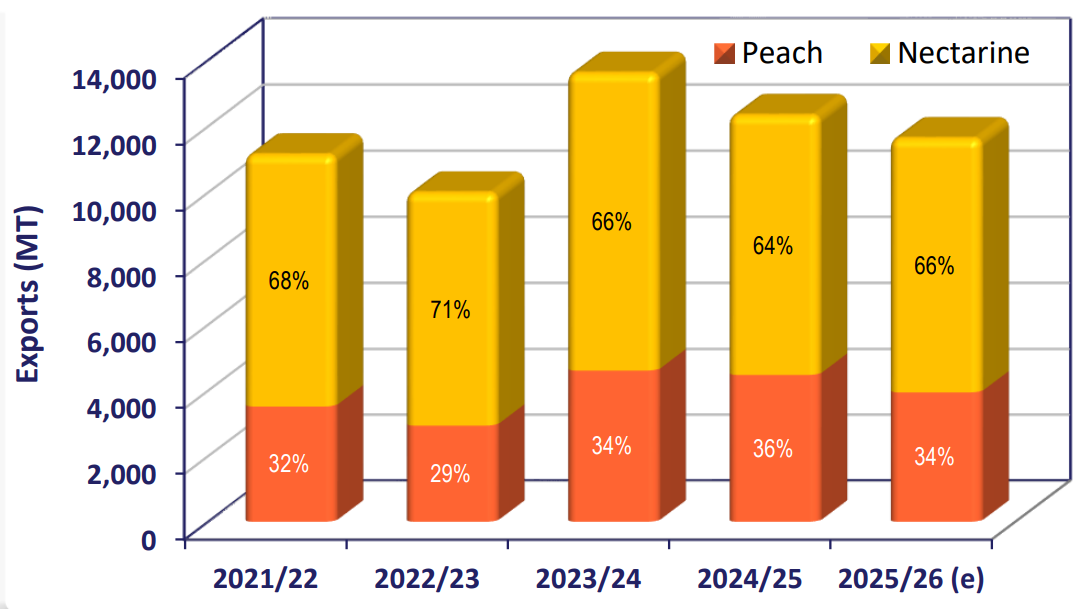
Australian fresh peach and nectarine exports are forecast to fall by 15% to 10,000 metric tons in 2026/27, following a 5% decline in the previous season. Nectarines make up about two-thirds of the export volume because their firmer flesh better withstands sea freight, whereas softer peaches store poorly and are primarily shipped by air.
China historically took more than three-quarters of Australia’s nectarine exports (77% in 2021/22 and 75% in 2023/24), but that share fell to 61% in 2024/25 and is estimated at 71% in 2025/26. Volumes to China have swung from year to year rather than falling steadily, peaking in 2023/24, dropping sharply in 2024/25 and recovering partly in the 2025/26 estimate.
In 2025/26, a cool spring delayed the Australian harvest by about two weeks, and November arrivals in China were markedly lower than in previous years. Chilean fruit [5] began arriving in volume from December, and Australia lost its early-season window. Estimated full-year shipments to China remain well below their 2023/24 level.
China: Imports Boom, but Chile Takes the Gains
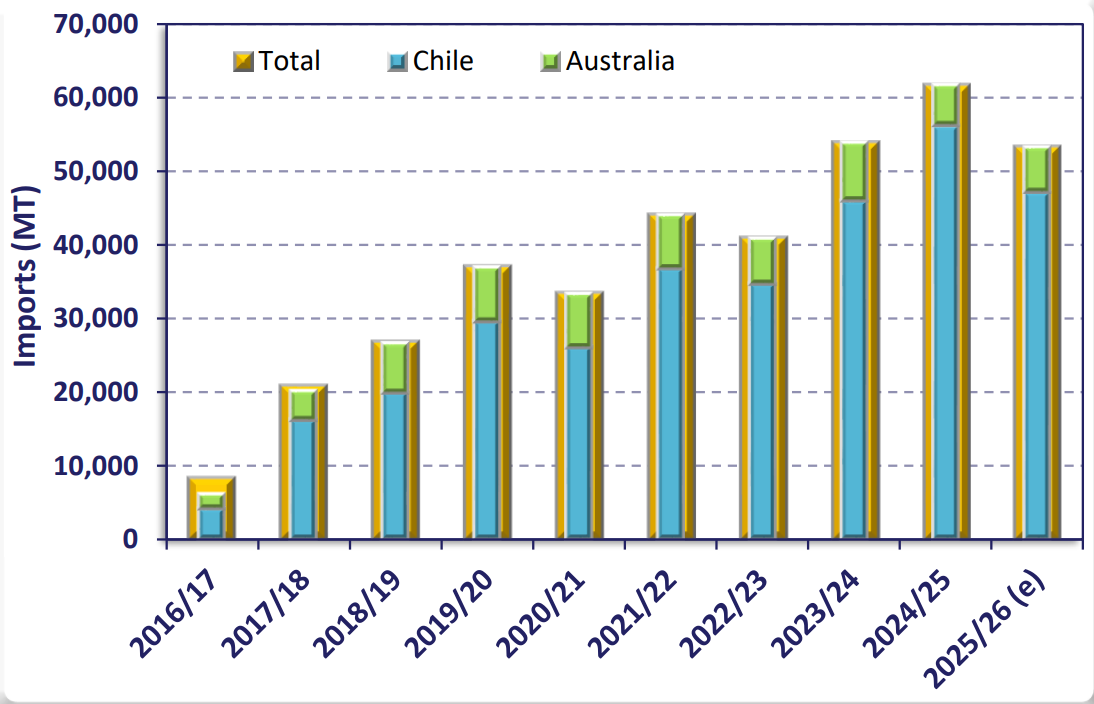
China’s imports of fresh peaches and nectarines have grown roughly sixfold over the past decade, with an estimated import volume of more than 50,000 metric tons in 2025/26. Almost all of this growth has come from Chile. Australian shipments have held at roughly 6,000 to 8,000 metric tons per year since 2019/20, leaving its share at approximately 10%, down from about 15% in 2023/24.
Australian growers have spent the past decade shifting to white-fleshed varieties, which Chinese consumers traditionally prefer for their sweet, fragrant, low-acid fruit. Even so, Australia has been losing ground to Chile, which holds the advantage on both price and supply volume. Australia’s main advantage is timing — its fruit reaches China in November, ahead of Chilean fruit in December, but that lead is lost if its harvest is delayed.
Images: Pixabay (main image), U.S. Department of Agriculture (body images)
This article was based on a Chinese article. Read the original article [6].
