
Fresh Belgian Apples Granted China Market Access [1]
Submitted by Jing Zang [2] on
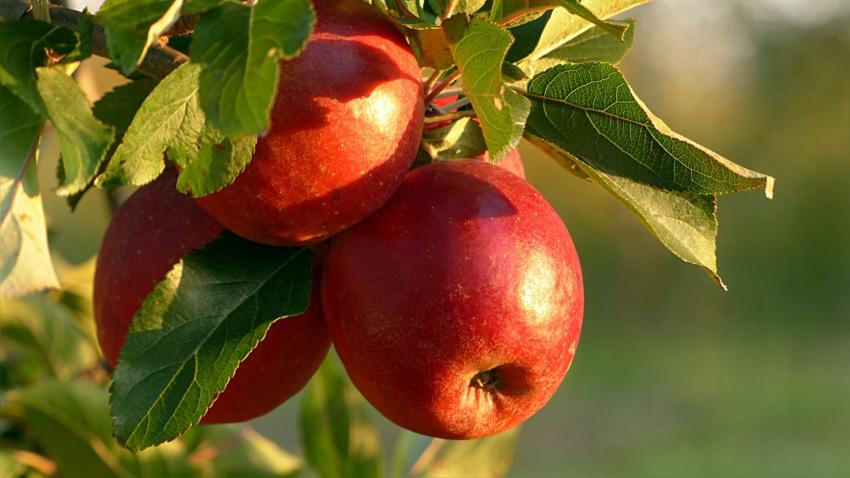
On June 2, the General Administration of Customs of China announced via its website [3] that fresh Belgian apples meeting the stipulated phytosanitary requirements would be permissible for import into China.
Negotiations on the protocol granting Belgian apples access to the Chinese market began in 2019, with the agreement recently finalized and signed by both sides. Belgium is one of Europe’s key apple and pear producers, known for its diverse range of apple varieties, particularly Jonagold, Boskoop and Golden Delicious.
Belgian pears first entered the Chinese market [4] in 2011, and Belgium is now one of China’s main sources of imported pears, with Conference pears [5] as the predominant variety. In 2024, Belgium’s apple industry rebounded strongly, with the market value soaring 70% to $229 million after two consecutive years of decline.
According to the GACC announcement, a total of 16 quarantine pests of concern have been identified by China. These include the Mediterranean fruit fly (Ceratitis capitata), codling moth (Cydia pomonella), appleseed moth (Cydia lobarzewskii), apple leaf curling midge (Dasineura mali), rosy leaf curling aphid (Dysaphis devecta), rosy apple aphid (Dysaphis plantaginea), European pear scale (Epidiaspis leperii), wooly apple aphid (Eriosoma lanigerum), European apple sawfly (Hoplocampa testudinea), apple mussel scale (Lepidosaphes ulmi), hydrangea scale (Pulvinaria hydrangeae), apple-grass aphid (Rhopalosiphum insertum) and four microbial plant pathogens (Phytophthora syringae, Venturia inaequalis, Verticillium dahliae and Erwinia amylovora).
Orchards intending to export fresh apples to China must also establish robust quality management and traceability systems, adhere to good agricultural practices and integrated pest management techniques, and maintain orchard hygiene by ensuring no nearby sources of contamination, promptly removing rotten or fallen fruits, and discarding spoiled produce.
During transportation from orchards to packaging facilities, fruits must be transported in enclosed vehicles or covered with protective materials, such as tarpaulins, to prevent pest infestation. Packaging facilities and cold storage warehouses must be kept in a hygienic condition and equipped with measures to prevent re-infestation, such as insect-proof screens or ultraviolet light traps.
During the packaging process, apples must undergo procedures including the removal of diseased or deformed fruits, sorting, grading and cleaning to ensure the absence of insects, mites, rotten fruits, branches, leaves, roots and soil.
To eliminate Mediterranean fruit flies, fresh Belgian apples destined for China must also undergo cold treatment. The treatment must satisfy one of the following conditions: a fruit pulp core temperature of 1.11 degrees Celsius or below for at least 14 consecutive days, 1.67 degrees Celsius or below for at least 16 consecutive days, or 2.22 degrees Celsius or below for at least 18 consecutive days.
Image: Pixabay
This article was based on a Chinese article. Read the original article [6].
