
China’s Pear Exports Rise in 2025 [1]
Submitted by Jing Zang [2] on
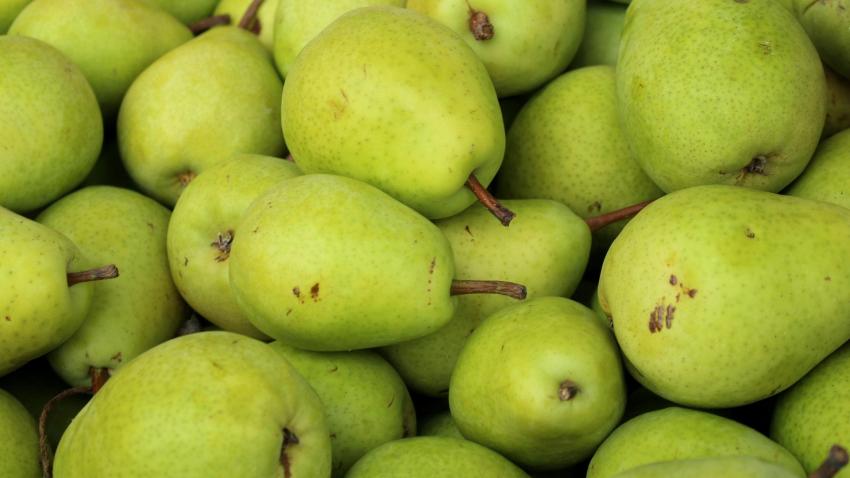
China’s pear exports displayed strong performance in 2025, sustaining the growth momentum seen in recent years. As the world’s largest exporter of fresh pears, China accounts for more than 30% of the global pear trade, consistently leading the international market. According to official statistics, China’s fresh pear exports reached $630 million in value and 707,000 metric tons in volume in 2025, representing year-on-year increases of 3.4% and 10%, respectively.
In terms of market distribution, China’s fresh pear exports demonstrate a well-balanced structure, characterized by stable traditional markets alongside expanding opportunities in emerging markets [3]. In 2025, the main export destinations included Indonesia, Vietnam, Kyrgyzstan, Thailand, Russia and Malaysia. Southeast Asia, together with the Middle East and Central Asia, remained core traditional markets with long-standing and steady demand. In recent years, exports to Russia have also trended upward, positioning this market as a potential new growth driver for the sector.
Amid the overall positive export performance, major production regions have shown varying results, with Cangzhou in Hebei province standing out in particular. According to statistics from Cangzhou Customs, the city exported 4,600 shipments of fresh pears in 2025, totaling 101,900 metric tons and valued at approximately 685 million Chinese yuan ($99.3 million), representing significant year-on-year increases of 18%, 20% and 17%, respectively.
In recent years, pear growers in Cangzhou have steadily advanced varietal improvement and technological upgrades. While reinforcing the strength of the traditional Ya (鸭梨) variety, growers have also been actively introducing premium cultivars such as Huangguan (黄冠), Xinli No. 7 (新梨七号), Qiuyue (秋月), Zaosu (早酥) and Green Gem (绿宝石). By strategically coordinating early-, mid- and late-maturing varieties, Cangzhou’s pear sector has achieved a well-distributed supply and more balanced market arrivals, significantly extending the marketing window and establishing a well-structured export model characterized by complementary varieties and staggered shipment schedules.
Beyond Cangzhou as a core player, Laiyang in Shandong province has also emerged as an important force in China’s fresh pear exports, leveraging its strength in specialty varieties. As the nation’s core production area for Qiuyue pears, the planting area for Qiuyue pears in Laiyang has been expanded to nearly 70,000 mu (4,667 hectares), with an annual output of up to 180,000 metric tons. In 2024, Laiyang Qiuyue pears successfully passed inspection and registration with Qingdao Customs, securing access to the European and U.S. markets.
A sales contract covering 1,000 metric tons of Laiyang Qiuyue pears has been signed with major U.S. supermarket chains and new orders have been secured from the Canadian market, further expanding China’s high-end fresh pear export segment and injecting new momentum into the optimization of the country’s export structure.
According to the latest China: Fresh Deciduous Fruit Annual [4] report released by the U.S. Department of Agriculture’s Foreign Agricultural Service, China’s pear production for the 2025/26 marketing year (July to June) is projected at 20.5 million metric tons, down 2% from the previous year. Owing to weakening domestic demand, China’s pear imports [5] are expected to fall below 6,000 metric tons, compared with more than 8,000 metric tons in the 2024/25 marketing year. Meanwhile, exports are likely to maintain the growth momentum seen in 2025 and continue rising.
Specifically, climatic differences across major production regions have had a significant impact on overall output. Anhui province, a key southern producing region, was expected to record steady production growth, supported by favorable weather conditions and improvements in cultivation techniques. By contrast, Shandong and Shaanxi provinces were projected to experience reduced output due to summer drought and high temperatures, while Hebei, the largest producing region, was anticipated to maintain a stable harvest.
Against the backdrop of an industry-wide oversupply and sluggish domestic consumption growth, the report forecasts that China’s pear planting area will gradually contract, leading to a decline in overall production.
Image: Pixabay
This article was translated from Chinese. Read the original article [6].
