
Côte d’Ivoire: From World’s Leading Cashew Producer to a Major Processing Hub [1]
Submitted by Produce Report [2] on
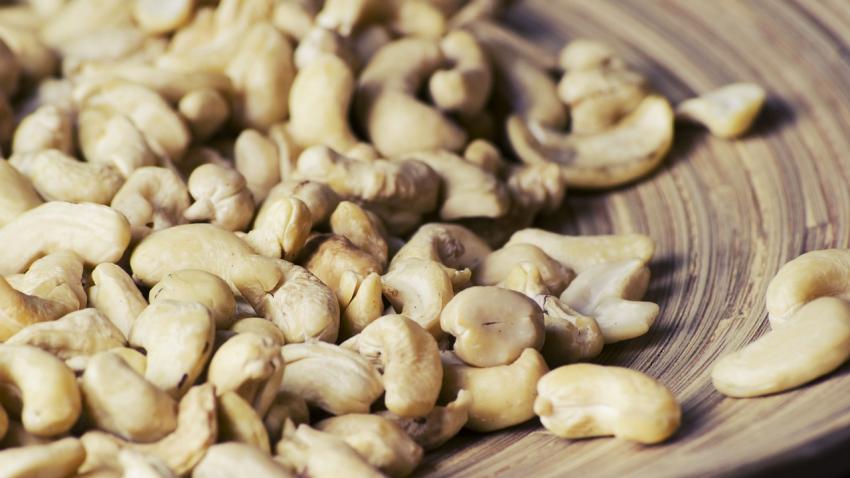
Côte d’Ivoire is the world’s largest producer of cashew nuts [3], accounting for approximately 40% of global production. Cashews have become the country’s second-largest agricultural export after cocoa. At the 2026 CFNA China International Tree Nuts Conference [4], which was held recently in Yiwu, Koné Diakaridia, president of the National Federation of Cashew Buyers and Cooperatives of Côte d’Ivoire (FENACACI), presented a comprehensive industry report on the country’s cashew sector, detailing the current state of production, processing transformation strategy, export landscape, and investment and cooperation opportunities.
Production: A Firmly Entrenched Global Leadership
In recent years, Côte d’Ivoire’s cashew production has witnessed significant growth. The commercial production volume reached 960,000, 1.02 million and 1.22 million metric tons in marketing years 2021, 2022 and 2023, respectively. After a dip to 940,000 metric tons in the 2024 season, the 2025 season saw a surge in output to 1.549 million metric tons, a 65% increase over 2024, further cementing the country’s position as the world’s top producer. In terms of producer income, farmers earned 311.1 billion West African CFA francs ($553 million) in 2024, which soared to 660 billion CFA francs ($1.17 billion) in 2025, a year-on-year increase of 112%, reflecting a substantial rise in the sector’s value.
Entering the 2026 season, owing to El Niño affecting flowering and yields, uneven rainfall impacting northern growing areas, and cross-border smuggling, the preliminary production estimate at the time of the report stood at 1.36 million metric tons.
Strategic Transformation: From Raw Material Exports to High-Value Processing
Côte d’Ivoire is actively transitioning from a purely producing country to a processing hub, with processing volumes and rates both climbing steadily. In the 2025 season, local processing reached approximately 690,000 metric tons, equivalent to a processing rate of 42–43%. In the 2026 season, the processed volume has already risen to 795,000 metric tons, an increase of about 90,000 MT (or 15%) year on year.
Processing capacity is expanding rapidly. The country currently has over 40 cashew processing plants, with 37 in operation in 2025, and an installed nominal capacity of 830,000 metric tons. Authorities have set a national processing target of 1 million metric tons. At the current pace, the country may achieve its earlier goal of reaching a 50% processing rate by 2030 ahead of schedule.
Government policy is the key driver behind this processing transformation. The state supports the local cashew processing industry through national subsidies, tax and customs incentives, and the development of dedicated agro-industry zones, while also promoting the diversification of byproducts and technological innovation.
Export Landscape: Kernel Exports on the Rise, China as a Strategic Market
Côte d’Ivoire exports cashew products to about 50 countries worldwide. With respect to raw cashew nuts, exports reached 861,000 metric tons in the 2025 season (about 56% of production). In the 2026 season, shipments have fallen to 570,000 metric tons (about 42% of production) on account of tighter export licensing requirements, shipping capacity constraints and higher logistics costs arising from geopolitical tensions in the Middle East.
The most notable shift in export structure is the rapid growth of cashew kernel exports. Côte d’Ivoire’s kernel exports increased from 30,000 metric tons in 2021 to 100,000 metric tons in 2025, making it the world’s second-largest exporter of cashew kernels, behind only Vietnam.
In 2025, Côte d’Ivoire exported 100,000 metric tons of cashew kernels to China, underscoring the strategic importance of the Chinese market. More importantly, China has granted full sanitary and phytosanitary access to cashews produced in the African countries with which it has diplomatic relations, allowing Ivorian cashew kernels to enter the Chinese market with zero tariffs. This advantage is accelerating the deep integration of the China/Africa cashew value chain.
Investment and Cooperation Opportunities: Building Strategic Partnerships
Côte d’Ivoire is not only the world’s largest cashew producer but also rapidly emerging as a major processing destination. Favorable conditions — including the ability for processors to purchase raw materials directly at the farm gate, an investment-friendly legal framework and the possibility of specific tax agreements, well-developed infrastructure, and continued subsidies for local processing — are enhancing the appeal of local processing. The country is also committed to deepening its cooperation with global partners on quality and standards improvement, as well as on establishing framework agreements to ensure supply chain stability.
According to reports from West African economic news portals, the European Bank for Reconstruction and Development announced in May 2026 a $60 million loan to Dorado, Côte d’Ivoire’s largest cashew processing company, while the European Investment Bank is assessing a 190 million euro financing package. The active participation of international capital underscores the enormous potential of Côte d’Ivoire’s cashew processing industry.
From Nov. 12 to 14, 2026, the 5th International Cashew Processing Equipment and Technology Exhibition (SIETTA) will be held in Abidjan. Koné extended an open invitation to global investors, technical experts and financial partners to attend the event and join hands in building sustainable partnerships to seize the opportunities offered by the cashew sector. As he stated in his closing remarks, “Côte d’Ivoire is today the world’s leading cashew producer. Our ambition is to become the global benchmark for cashew processing, quality and value creation.”
Image: Pixabay
